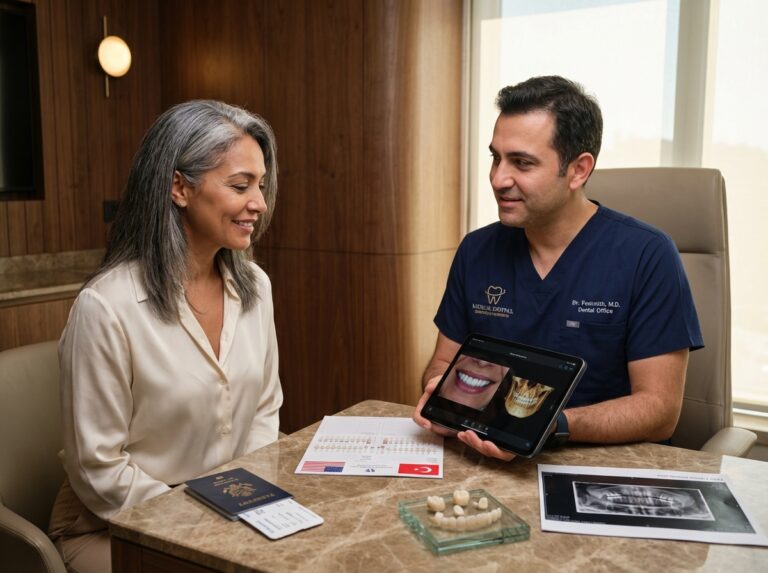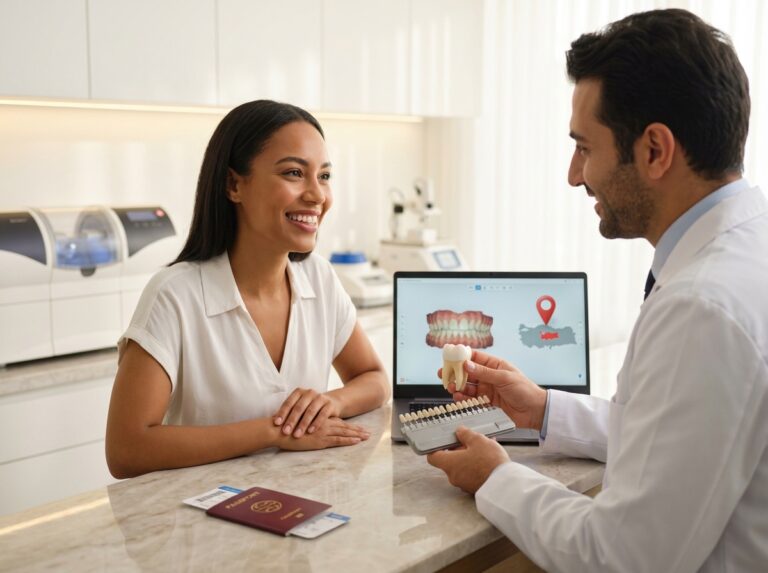
Planning a Hollywood smile abroad? This guide compares Turkey, Mexico, and Thailand to help U.S. patients find affordable, safe dental care. We’ll introduce typical costs, quality indicators, travel logistics, clinic vetting checklists, and safety tips from pre-trip planning through follow-up. Use this article to weigh value, risks, and practical steps for a cost-effective smile makeover overseas.
What the Hollywood Smile Means and Common Cosmetic Procedures
When you hear the term “Hollywood smile,” you’re probably picturing the flawless, brilliant smiles you see on the red carpet. It’s not just about white teeth; it’s an aesthetic ideal. Patients seeking a Hollywood smile are looking for a specific set of characteristics that create a look of perfect health and beauty. These include:
- Symmetry: The teeth on the left side of the mouth should be a near mirror image of the teeth on the right.
- Bright Shade: A uniformly white, but natural-looking, shade is a hallmark. It’s often a shade like BL1 or BL2 on the dental color chart, which is brighter than natural enamel.
- Uniform Shape and Proportion: The teeth are well-proportioned to each other and to the patient’s facial features. They have consistent shapes without chips, cracks, or uneven edges. The two front teeth are typically the most dominant, with the adjacent teeth slightly shorter, creating a pleasing and gentle “smile line.”
Achieving this look is a comprehensive approach known as a smile makeover, which combines several cosmetic dentistry procedures tailored to your specific needs. Understanding these procedures is key to comparing costs for cosmetic dentistry abroad, because the price is tied to the *scope* of work, not just a sticker price per tooth.
Porcelain Veneers
These are the cornerstone of most Hollywood smiles. They are ultra-thin, custom-made shells of ceramic material bonded to the front surface of your teeth to change their color, shape, size, or length.
- Ideal Candidate: Someone with healthy teeth and gums but cosmetic issues like severe discoloration, chips, gaps, or minor misalignment.
- Expected Lifespan: 10 to 20 years with proper care. Many clinics abroad offer warranties, often around 5 years, but this varies.
- Typical Steps: The process usually requires two to three visits. First is the consultation and design phase. Next, the dentist prepares the teeth by removing a very thin layer of enamel (about 0.5mm). Impressions are taken, and temporary veneers are placed. Finally, a dental lab fabricates your permanent porcelain veneers, which are then bonded to your teeth in the final visit.
- Common Complications & Recovery: Temporary tooth sensitivity is common for a few days. Complications are rare but can include a veneer debonding or chipping. Recovery is almost immediate, though your gums may need a week to adjust to the new veneers.
Composite Veneers (Dental Bonding)
A more affordable and less invasive alternative to porcelain, composite veneers involve applying a tooth-colored resin directly to the tooth and sculpting it into the desired shape in a single visit.
- Ideal Candidate: Patients with minor issues like small chips, gaps, or discoloration who want a quick, reversible solution.
- Expected Lifespan: 5 to 7 years. They are more prone to staining and chipping than porcelain.
- Typical Steps: This is usually a one-visit procedure. The tooth surface is lightly etched, a bonding agent is applied, and then the composite resin is layered, shaped, and hardened with a special light.
- Common Complications & Recovery: The main issue is a higher likelihood of staining or chipping over time. There is no recovery time.
Dental Crowns
While veneers only cover the front of a tooth, a crown encases the entire tooth. They are used when a tooth has significant damage or decay that a veneer cannot fix.
- Ideal Candidate: Someone with a broken, severely worn, or heavily filled tooth that needs both cosmetic improvement and structural support.
- Expected Lifespan: 10 to 15+ years.
- Typical Steps: Similar to veneers but more extensive. The tooth is significantly reshaped to accommodate the crown. Impressions are taken, a temporary crown is placed, and the permanent crown is cemented on during a second visit.
- Common Complications & Recovery: Potential for nerve irritation or an improper fit requiring adjustment. Gums may be sore for a few days.
Tooth Whitening
Professional whitening is often the first step in a smile makeover, used to brighten the natural teeth that won’t be covered by veneers or crowns.
- Ideal Candidate: Anyone with surface stains from coffee, tea, or smoking who wants a brighter smile. It does not work on intrinsic (internal) stains.
- Expected Lifespan: Results can last from a few months to a couple of years, depending on diet and oral hygiene.
- Typical Steps: An in-office procedure involves applying a powerful bleaching gel to the teeth, often activated by a laser or light, taking about an hour.
- Common Complications & Recovery: The most common side effect is temporary tooth sensitivity, which usually subsides within 48 hours.
Orthodontics (Clear Aligners)
For smiles with more significant alignment issues, orthodontics are necessary. Clear aligners are a popular, discreet option for adults.
- Ideal Candidate: Patients with mild to moderate crowding, spacing, or bite issues. Severe cases may still require traditional braces.
- Expected Lifespan: The results are permanent, provided a retainer is worn as prescribed.
- Typical Steps: The process starts with a digital scan of your teeth. A series of custom, clear plastic trays are created, each worn for about two weeks to gradually shift your teeth. Treatment can take anywhere from 6 to 18 months.
- Common Complications & Recovery: Complications are rare but can include bite changes if not properly managed. There is no recovery, just an adjustment period to wearing the aligners.
Gum Contouring
The perfect smile isn’t just about teeth; it’s also about the frame. Gum contouring reshapes the gum line to create a more balanced and symmetrical appearance.
- Ideal Candidate: Someone with a “gummy smile” (excessive gum tissue) or an uneven gum line.
- Expected Lifespan: Results are generally permanent.
- Typical Steps: A dentist uses a laser or scalpel to precisely remove excess gum tissue and sculpt the gum line. The procedure is quick, often completed in one visit.
- Common Complications & Recovery: Minor swelling and discomfort are expected for a few days. Infection is a small risk. Full healing takes about one to two weeks.
Dental Implants
A true Hollywood smile has no gaps. For missing teeth, dental implants are the premier solution.
- Ideal Candidate: A patient with one or more missing teeth who has sufficient jawbone density to support the implant.
- Expected Lifespan: The implant post itself can last a lifetime. The crown attached to it may need replacement every 10-15 years.
- Typical Steps: This is a multi-stage surgical process. A titanium post is surgically placed into the jawbone. After a healing period of 3-6 months (osseointegration), an abutment and a permanent crown are attached.
- Common Complications & Recovery: Risks include infection, nerve damage, or implant failure. Recovery from the initial surgery takes a few weeks, but the entire process spans several months.
A full smile makeover strategically combines these procedures. For example, a patient might have their lower teeth whitened, receive 8-10 porcelain veneers on their upper teeth, and undergo gum contouring for a harmonious result. This is why a simple “cost per veneer” is a poor comparison metric. The total cost of a Hollywood smile in Turkey, Mexico, or Thailand depends entirely on which of these treatments you need to achieve your desired outcome. A comprehensive treatment plan is the only way to get an accurate quote and make a true apples-to-apples comparison. For instance, a full smile makeover package in Turkey often includes a set number of veneers or crowns, whitening, and sometimes minor gum work, all bundled into one price.
Why Consider Dental Tourism Benefits and Risks
The idea of getting a perfect smile while saving thousands of dollars is incredibly appealing. For many Americans, the high cost of cosmetic dentistry at home makes a “Hollywood Smile” feel out of reach. This is where dental tourism comes in, but before you book a flight, it’s crucial to weigh the significant dental tourism benefits against the potential pitfalls.
The most powerful motivator is cost. A full smile makeover with porcelain veneers in the United States can easily cost $20,000 to $40,000 or more. Abroad, that same procedure might range from $3,000 to $10,000. This isn’t because the materials are cheap or the quality is inherently lower. The savings come from a different economic structure: lower labor costs, reduced overhead for clinic operations, and sometimes government incentives to promote medical tourism. The result is that you can often get the exact same high-quality porcelain or zirconia, crafted with advanced CAD/CAM technology, for a fraction of the U.S. price.
Another major benefit is speed. In the U.S., a multi-veneer case can be spread out over several weeks or months. International clinics that cater to dental tourists are built for efficiency. Many have state-of-the-art, in-house dental labs, which eliminates the delay of sending impressions to an outside facility. This allows them to complete a full smile makeover, from initial consultation to final fitting, in as little as 5 to 10 days. This compressed timeline is perfect for patients who can’t take extended time off work. These clinics are often high-volume centers specializing exclusively in cosmetic procedures, meaning their dentists and technicians have a level of experience with smile makeovers that a general U.S. dentist might not see for years. Finally, there’s the appeal of combining treatment with travel. The money saved on the dental work can pay for the entire trip, turning a medical procedure into a vacation.
However, it’s essential to understand the risks of dental tourism. The single biggest risk is the variability in clinical standards. While there are world-class clinics in every popular destination, there are also subpar ones. A botched cosmetic job can lead to chronic pain, infections, and the need for extensive, costly repairs back home. This brings up the next major issue: managing complications. Many U.S. dentists are hesitant to touch work done by another practitioner, especially from overseas, due to liability concerns. You could find yourself needing urgent care with no one willing to provide it, or facing a bill for corrective work that erases all your initial savings.
Continuity of care is another challenge. A smile makeover requires follow-up, and when your dentist is an ocean away, routine check-ups are impossible. This is particularly risky for complex procedures like dental implants, which require long-term monitoring. Travel-related issues, like flying soon after certain procedures, can increase the risk of complications. Language barriers can also lead to critical misunderstandings. Lastly, legal recourse is limited. If you have a dispute, navigating a foreign legal system is incredibly difficult, and that “10-year warranty” the clinic promised may be practically unenforceable from the U.S.
Fortunately, you can take concrete steps for safe dental travel and mitigate these risks.
- Verify Everything. Don’t just trust the clinic’s website. Look for independent verification. Search for clinics with international accreditations like JCI (Joint Commission International) or ISO certifications. Check if the dentists are members of their national dental association or international cosmetic dentistry organizations. Ask for before-and-after photos of cases similar to yours and request to speak with a past patient from the U.S.
- Get a Written Contract. Insist on a detailed, written treatment plan before you pay anything. It should specify the exact procedures, the brand names of materials being used (e.g., IPS e.max veneers, Straumann implants), the full cost breakdown, and a clear timeline. Also, get the warranty terms in writing, detailing what is covered (e.g., material failure, debonding), what it voids (e.g., accidental trauma), and for how long.
- Plan for Post-Treatment Care. Speak with your local dentist before you go. Explain your plans and ask if they would be willing to handle your follow-up care, cleanings, and address minor issues. Finding a supportive dentist beforehand provides a crucial safety net.
- Use Smart Search Tactics. When researching, go beyond generic searches. Use specific queries like “patient reviews for [Clinic Name] Istanbul” or “complications with dental veneers in Mexico.” Be wary of red flags: clinics that pressure you for a quick deposit, offer prices that seem too good to be true, are not transparent about the dentist’s credentials, or showcase “shark teeth” preparations in their gallery (where healthy teeth are aggressively filed down to small pegs).
By balancing the benefits with a careful and thorough approach to planning, you can make dental tourism a successful experience.
Comparing Costs Quality and Logistics in Turkey Mexico and Thailand
When you start comparing destinations for your Hollywood Smile, the big three—Turkey, Mexico, and Thailand—quickly rise to the top. Each offers a unique blend of cost, quality, and travel experience. Understanding these differences is the key to choosing the right location for your needs and budget. This is a detailed breakdown of what you can expect in 2025.
Turkey: The All-Inclusive Package Powerhouse
Turkey has built a global reputation for offering some of the most competitively priced dental packages, often bundling treatment, accommodation, and local transfers into one price. This makes budgeting straightforward for many international patients.
Typical Costs (2025 Estimates)
The Turkey dental veneers cost is often the lowest among the top destinations, especially for full-mouth restorations. Clinics in Istanbul, Izmir, and Antalya are highly competitive.
- Full Hollywood Smile (8-10 veneers): $2,500 – $7,000
- Single Porcelain Veneer: $250 – $500
- Single Ceramic (Zirconia/E-max) Crown: $250 – $550
- Single Dental Implant (implant and abutment only): $500 – $900
These packages frequently include 4 or 5-star hotel stays, all airport and clinic transfers, and sometimes language assistance. However, always confirm what’s excluded; flights, food, and pre-travel diagnostic tests are almost always your responsibility.
Clinic Standards and Materials
Top Turkish clinics are modern, often holding ISO certifications and catering almost exclusively to international patients. Many use German or Swiss brands for materials and equipment. In-house labs with CAD/CAM technology are common, allowing for rapid fabrication of veneers and crowns. You’ll find premium materials like IPS e.max (lithium disilicate) for veneers and zirconia for crowns and bridges. The workflow is highly digitized, from intraoral scans to digital smile design.
Logistics and Turnaround
A typical Hollywood Smile makeover with veneers takes 5 to 7 days. This includes the initial consultation, tooth preparation, temporary fittings, and final placement.
- Travel from the U.S.: This is the biggest hurdle. Direct flights from major hubs like New York (JFK) or Los Angeles (LAX) to Istanbul (IST) take 10-13 hours.
- Visa: U.S. citizens currently need an e-Visa, which is simple to obtain online before travel.
- Realistic Total Budget: For a $4,500 smile package, add $1,200-$1,800 for round-trip flights, plus another $500 for food and personal expenses. Your total estimated cost would be $6,200 – $6,800.
Patient Experience
English is widely spoken in these clinics. Most assign you an international patient coordinator who manages your entire journey. Warranties are common, typically lasting 3-5 years on veneers, but require you to return to Turkey for any corrective work.
Mexico: The Proximity Advantage
For U.S. patients, especially those in southern states, Mexico’s biggest selling point is convenience. Cities like Tijuana, Los Algodones, and Cancun are easily accessible, drastically cutting down on travel time and cost.
Typical Costs (2025 Estimates)
The Mexico dental tourism cost is higher than Turkey’s but still represents a 50-70% saving compared to U.S. prices. The proximity means packages rarely include hotels, as many patients drive across the border for the day or prefer to book their own stay.
- Full Hollywood Smile (8-10 veneers): $4,000 – $10,000
- Single Porcelain Veneer: $400 – $650
- Single Ceramic (Zirconia/E-max) Crown: $450 – $700
- Single Dental Implant (implant and abutment only): $900 – $1,500
Clinic Standards and Materials
Quality can vary significantly. It’s crucial to vet clinics carefully. Top-tier clinics in Cancun, Mexico City, and Tijuana are on par with U.S. standards, with American Dental Association (ADA) member dentists and modern technology. They use the same high-quality materials, such as e.max and zirconia, often sourced from U.S. or German labs. Ask if they have an in-house lab or which external lab they partner with, as this impacts turnaround time and quality control.
Logistics and Turnaround
Turnaround time for veneers is typically 7 to 10 days, sometimes split into two shorter trips a week apart. This flexibility is a major plus.
- Travel from the U.S.: You can drive to border towns or take short, affordable flights to destinations like Cancun (2-4 hours from many U.S. cities).
- Visa: U.S. citizens do not need a visa for tourist stays of up to 180 days.
- Realistic Total Budget: For a $6,000 smile makeover in Cancun, add $400-$700 for flights, $800 for a week-long hotel stay, and $600 for expenses. Your total estimated cost would be $7,800 – $8,100.
Patient Experience
Language is rarely a barrier in clinics catering to Americans; staff and dentists are typically bilingual. Patient coordinators are common. Warranties are similar to Turkey’s, but the ease of travel makes follow-up visits far more practical.
Thailand: The Balance of Quality and Hospitality
Thailand is a long-established leader in medical tourism, known for its JCI-accredited hospitals, high clinical standards, and exceptional customer service. It strikes a balance between cost and a premium healthcare experience.
Typical Costs (2025 Estimates)
The Thailand dental veneers price sits between Turkey and Mexico. It’s not the absolute cheapest, but patients often feel the value is high due to the level of care and clinical excellence.
- Full Hollywood Smile (8-10 veneers): $3,500 – $8,000
- Single Porcelain Veneer: $350 – $600
- Single Ceramic (Zirconia/E-max) Crown: $400 – $700
- Single Dental Implant (implant and abutment only): $1,000 – $1,800
Clinic Standards and Materials
Dental clinics in Bangkok and Phuket are often state-of-the-art, with many located within internationally accredited hospitals. Sterilization and clinical protocols are rigorously followed. Digital smile design, in-house labs, and premium materials from Europe and the U.S. are standard. They have a strong reputation for complex cosmetic and restorative work.
Logistics and Turnaround
A veneer procedure typically requires a stay of 8 to 12 days to allow for meticulous lab work and adjustments. Clinics here tend not to rush the aesthetic process.
- Travel from the U.S.: This is the longest and most expensive journey, with flights from the West Coast taking 15+ hours, often with a layover.
- Visa: U.S. citizens can enter for up to 30 days without a visa under the Visa Exemption Rule.
- Realistic Total Budget: For a $5,000 smile makeover, factor in $1,500-$2,200 for flights, $700 for a 10-day stay in a comfortable hotel, and $700 for expenses. Your total estimated cost would be $7,900 – $8,600.
Patient Experience
The patient experience is where Thailand truly shines. Service is impeccable, English is spoken fluently in all major clinics, and communication is clear and professional. Warranties are generally for 2-5 years, and clinics provide detailed documentation for your records and any potential follow-up with a dentist back home.
How to Plan Your Trip Step-by-Step and Clinic Vetting Checklist
A successful outcome depends on meticulous research and planning. This step-by-step guide and comprehensive dental travel checklist will help you navigate the process of planning a dental trip for your Hollywood smile, from initial contact to post-procedure care.
Phase 1: Remote Research and Consultation
Your journey begins at home, long before you step into a foreign clinic. The goal is to gather enough information to create a shortlist of 2-3 highly qualified clinics.
Requesting a Remote Consultation
Most international clinics offer free online consultations. To get an accurate assessment, you need to provide clear diagnostic materials. Prepare to send the following:
- High-Resolution Photos. Take clear, well-lit pictures of your teeth from multiple angles. Include a full-face smiling photo, a close-up of your smile, shots from the left and right sides with your teeth together, and photos of your upper and lower arches separately.
- Dental Records. If you have recent X-rays (like a panoramic OPG) or a CBCT scan from your U.S. dentist, send them. This is especially critical for implant evaluations.
- A Brief Video. Record a short video where you speak a few sentences and smile naturally. This helps the dentist assess your smile dynamics and lip line.
Questions to Demand Answers For
A professional clinic will welcome detailed questions. Do not proceed if you receive vague or evasive answers. Your initial inquiry should cover:
- Treatment Plan. Ask for a detailed, written treatment plan outlining each step, the exact number of veneers or crowns, and the specific materials to be used (e.g., IPS E.max, Zirconia).
- The Dentist. Who exactly will be performing my procedure? What are their qualifications, specializations (e.g., prosthodontics, cosmetic dentistry), and years of experience with smile makeovers?
- The Quote. Request an all-inclusive quote. Ask what is specifically excluded. Does the price include temporary restorations, anesthesia, night guards, X-rays, and any necessary follow-up adjustments?
- Technology and Lab. Do you use digital tools like an intraoral scanner and Digital Smile Design (DSD) software? Do you have an in-house dental lab or do you outsource? A high-quality in-house or partner lab is crucial for great results.
- Warranty. What is the written warranty on your veneers or crowns? What does it cover (e.g., chipping, debonding) and what are the conditions?
Phase 2: The Clinic Vetting Checklist
Once you have quotes and initial answers, it’s time to dig deeper. Use this checklist for your Hollywood smile planning to verify the clinic’s quality and safety standards.
- Accreditation and Licensing.
Check for internationally recognized accreditations like JCI (Joint Commission International) or ISO certifications. At a minimum, verify the clinic and its dentists are licensed with the national dental association of that country. - Dentist Credentials.
Look up the dentist’s CV. Verify their dental school, postgraduate training, and any specializations. A prosthodontist is a specialist in restorations like veneers and crowns. - Portfolio and Independent Reviews.
Ask for full case documentation, not just “before and after” photos. Look for reviews on independent platforms like Google, Trustpilot, and expat forums to get a more balanced view of the patient experience. - Video Consultation.
Request a video call. This allows you to speak directly with the dentist, build rapport, and ask to see a virtual tour of the clinic’s equipment and sterilization facilities. - Sterilization and Safety Protocols.
Ask the clinic to detail their sterilization process. They should mention using an autoclave for instrument sterilization and confirm they have protocols for medical emergencies. - Contracts and Policies.
Request a copy of the treatment contract, informed consent forms, and their policies on refunds and managing complications. A transparent clinic will provide these documents without hesitation.
Phase 3: Travel and Financial Logistics
With a clinic selected, you can finalize your travel plans.
Timing Your Trip
The length of your stay depends on the procedure.
- Veneers/Crowns Itinerary (5-10 Days). A common schedule involves two main appointments. Day 1-2: Consultation, smile design, and tooth preparation, followed by the placement of temporary veneers. Day 5-8: The lab fabricates your permanent veneers. You’ll return for the final fitting, bonding, and any minor adjustments.
- Dental Implant Itinerary (2-3 Trips over 3-9 Months). This is a multi-stage process. Trip 1 (5-7 Days): Surgical placement of the implant post. You then return home for a healing period of 3-6 months (osseointegration). Trip 2 (5-7 Days): The dentist places the abutment and the final crown.
Pre-Travel Preparations
Get medical clearance from your primary care physician in the U.S., especially if you have pre-existing health conditions. Purchase comprehensive travel insurance that explicitly covers medical and dental emergencies abroad, including medical evacuation. Discuss your post-op care plan with the foreign clinic and try to find a U.S. dentist willing to handle routine follow-ups or minor emergencies upon your return.
Managing Payments and Budgeting
Clinics typically require a deposit to secure your appointment. Be cautious of requests for full payment upfront via wire transfer. Using a credit card for the deposit and final payment can offer fraud protection. Inform your bank of your travel plans to avoid transaction declines. Finally, budget a contingency fund of at least 15-20% of your total estimated cost to cover unexpected needs.
Frequently Asked Questions
This section tackles common logistical, financial, and safety questions that require direct, actionable answers.
How much can I realistically save compared to the U.S.?
You can expect to save between 50% and 70% on a full Hollywood Smile makeover. In the U.S., a full set of porcelain veneers can cost $20,000 to $40,000. In countries like Turkey, Mexico, or Thailand, the total package price for a similar procedure often falls between $3,000 and $10,000. The final cost depends on the number of teeth, the material used (e.g., E-max vs. Zirconia), and any additional procedures required.
Actionable Step: Request a detailed, all-inclusive quote that itemizes every cost. This includes the veneers, consultations, X-rays, temporary fittings, and night guard. This prevents surprise fees.
Can I get financing or pay in installments?
Direct financing from an international clinic is uncommon for foreign patients. You are typically expected to pay in full by the time treatment is complete. Most patients use U.S.-based financing options, such as personal loans from a bank or credit union, a medical credit card, or a low-interest credit card.
Actionable Step: Secure your financing in the U.S. before you book your trip. Compare personal loan rates online. Avoid relying solely on high-interest credit cards, as this can quickly erode your cost savings.
Are anesthesia and sedation options available?
Local anesthesia is standard for all preparatory work and is included in the cost. For patients with significant dental anxiety, many modern clinics offer sedation options. These can range from oral sedatives to intravenous (IV) sedation, also known as “twilight sleep.” General anesthesia is less common and reserved for very extensive surgical procedures. Sedation options will always cost extra.
Actionable Step: If you need more than local anesthesia, discuss your anxiety with the clinic during your remote consultation. Ask specifically what sedation options they offer, the additional cost, and the credentials of the professional who will administer it.
Final Recommendations Results and Next Steps
The final decision on where to get your Hollywood Smile comes down to your personal priorities. This isn’t about finding the one “best” country, but about finding the best country for you.
To help you decide, here is a quick decision-making guide. Think about which factor matters most to you and see which destination aligns best.
| Your Priority | Turkey | Mexico | Thailand |
|---|---|---|---|
| Lowest Possible Price | Often the winner. All-inclusive packages offer incredible value, bundling treatment, hotels, and transfers. The cost of a Hollywood Smile in Turkey is frequently the most competitive. | Very affordable compared to the U.S., but can be slightly more expensive than Turkey for a full makeover. | Competitive pricing, but flights and a longer stay can increase the total cost beyond Turkey’s packages. |
| Shortest Travel & Follow-Up | Long-haul flight (10+ hours). Follow-up visits are a significant time and cost commitment. | The clear winner for U.S. patients. Short flights or even driving make initial and follow-up trips simple and less expensive. | The longest travel time (15-20+ hours). Best suited for a single, longer trip rather than multiple visits. |
| Ease of Communication | Top clinics have excellent English-speaking staff and patient coordinators, but it’s less common outside the tourist/medical hubs. | Excellent. Proximity to the U.S. means English is widely spoken in dental clinics, especially in border towns and major cities. | Very good in major clinics and tourist areas. Thai dentists often train in the U.S. or Europe. |
| Combining with a Vacation | Excellent. Offers a rich cultural experience, historical sites, and beautiful coastlines. Ideal for a 1-2 week trip. | Good for short getaways. Perfect for a quick trip to a resort town like Cancun or a visit to a border city. | Exceptional. A world-class tourist destination with stunning beaches, food, and culture. Best for a longer vacation of 2+ weeks. |
Once you’ve identified your top-choice country, it’s time to move from research to action. Follow this dental tourism checklist to ensure a safe and successful journey.
- Gather at Least Three Remote Consultations.
Do not settle on the first clinic you find. Contact at least three well-regarded clinics in your chosen country. Provide them with clear photos of your teeth and a description of your goals. Ask for a detailed treatment plan, a cost breakdown, and a digital smile design. This mock-up shows you what your results could look like and confirms you and the dentist share the same vision. - Verify Accreditations and Ask About the Lab.
Look for international accreditations like JCI or ISO 9001 on the clinic’s website, then verify it on the accrediting body’s site. Ask a direct question: “Is your dental laboratory in-house or outsourced?” In-house labs often allow for faster adjustments and better quality control. Also ask what brand of materials they use for veneers or crowns (e.g., E.max, Zirconia). - Budget for the Entire Trip, Including a Follow-Up.
Your budget for affordable dental care abroad must go beyond the clinic’s quote. Factor in flights, accommodation (if not included), travel insurance, food, and local transportation. Most importantly, budget for at least one potential follow-up visit. Even with perfect execution, minor adjustments might be needed a few months later. Planning for it financially removes future stress. - Arrange for U.S. Dental Backup.
Before you leave, speak with your local dentist. Be transparent about your plans. Ask if they would be willing to assist with minor follow-up care, such as a professional cleaning around your new veneers or adjusting the bite. Some dentists may be hesitant, so it’s better to find a supportive one before you go. - Secure a Written Guarantee.
Never proceed without a detailed, written guarantee or warranty. It should clearly state what is covered (e.g., fractures, debonding), for how long (5-10 years is standard for veneers), and what is excluded (e.g., damage from accidents, poor hygiene). Get this in writing before you pay a deposit.
Finally, be smart about payments and watch for red flags. Avoid clinics that demand 100% payment upfront via wire transfer. A typical structure is a small deposit to book, a larger portion upon arrival, and the final balance upon completion. Using a credit card for payments offers better fraud protection. Red flags include clinics that are vague about their dentists’ qualifications, use stock photos instead of their own patient results, or pressure you into making a quick decision. Finding the best country for a Hollywood smile is a personal journey, but with careful planning, it can be an incredibly rewarding one.
References
- Hollywood Smile in Turkey – Costs and Packages 2025 – Bookimed — The procedure costs $3,000–$5,000 according to verified pricing data, depending on the complexity and materials used. Prices in Turkey are significantly lower …
- 2025 Prices & Everything About the Perfect Smile in Turkey — In 2025, patients can expect the cost of a full Hollywood Smile makeover in Turkey to be between $3,000 and $7,000. This significant price differential is not a …
- Hollywood Smile Cost in Turkey 2026 | Save 60-70% — The cost of a Hollywood Smile in Turkey typically ranges from $2000 to $5000. The final price depends on various factors, including the clinic you choose,
- Hollywood Smile Cost in Turkey – Maltepe Dental Clinic Istanbul — In Turkey, a comprehensive Hollywood Smile package typically ranges from €4,000 to €8,000 for a full set of 16-20 restorations (upper and lower …
- Hollywood Smile Makeover – 2025 Costs in Turkey – Heva Clinic — Hollywood smile makeover costs in Turkey can vary between $3,300 and $5,500 depending on the procedures you will need to achieve that glamorous smile. For …
- Hollywood Smile in Turkey: Cost, Clinics & What to Know — The typical hollywood smile turkey price ranges from $2,500 to $6,500, making it up to 70 percent more affordable compared to Western countries.
- How Much Does a Hollywood Smile Cost in Turkey | 2025 — The average cost for a Hollywood Smile in Turkey typically ranges from $3,000 to $7,000 USD, depending on the materials used and the extent of the treatment …
- Hollywood smile makeover price in Turkey 2025 – Autora Clinic — $10,000 to $17,000, while a full Hollywood smile Turkey cost can range between $2,000 – $4,000. Hollywood smile UK price VS Hollywood smile …
- Hollywood smile in Turkey 2025: Cost & steps | VK Smile Studio — Planning a Hollywood smile in Turkey 2025? VK Smile Studio covers prices, 3-6-day timelines, materials & aftercare – view our before/after …
Legal Disclaimers & Brand Notices
This content is provided for informational purposes only and is not intended to be a substitute for professional medical or dental advice, diagnosis, or treatment. Always seek the advice of a qualified healthcare provider with any questions you may have regarding a medical condition, procedure, or recovery. Reliance on any information provided in this article is solely at your own risk.
All product names, logos, and brands mentioned in this article are the property of their respective owners. The use of these names, logos, and brands does not imply endorsement or affiliation.