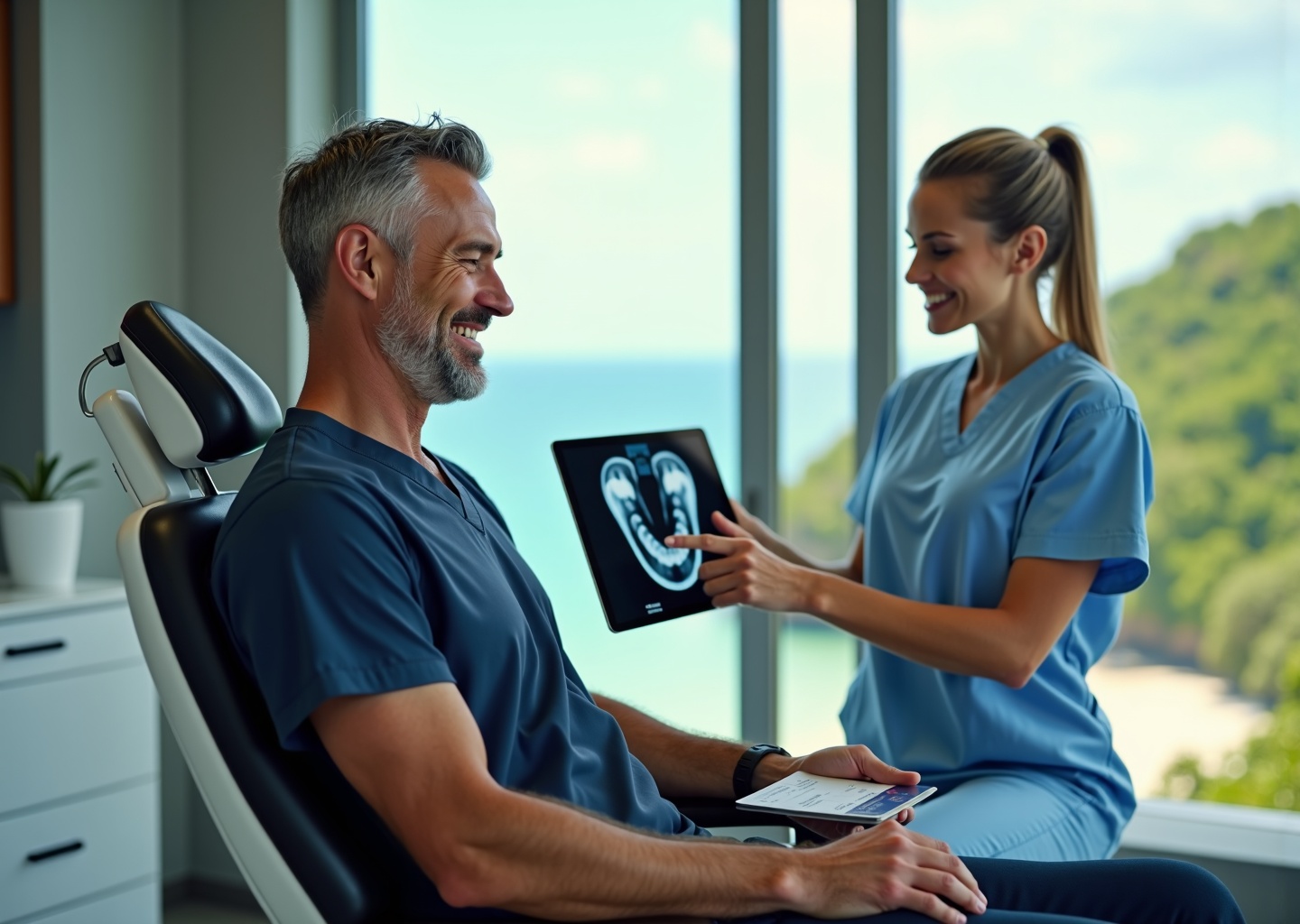
Planning dental treatment abroad? This Costa Rica Dental Guide 2025 explains why U.S. patients choose Costa Rica for affordable, high-quality dental care. It previews typical procedures and price ranges, how to vet clinics and clinicians, travel logistics and recovery planning, and safety and follow-up tips so readers can plan a safe, cost-effective dental trip with confidence.
Why Costa Rica is a Top Choice for Dental Travel
For years, Americans have viewed Costa Rica as a lush paradise for ecotourism. But by 2025, its reputation as a world-class dental destination is just as strong. The country has successfully merged high-quality healthcare with its robust tourism infrastructure, creating an accessible and reliable option for U.S. patients seeking to escape astronomical dental costs back home. It’s not just about saving money; it’s about receiving excellent care in a place that feels both safe and welcoming. The combination of affordability, proximity, and proven quality makes it a leading choice for anyone considering dental work abroad.
The primary driver is, without a doubt, the staggering cost savings. Patients regularly report saving between 50% and 70% on their dental procedures compared to what they were quoted in the United States. For the more than 75 million Americans without dental insurance, this difference is life-changing. A full-mouth reconstruction that might cost $55,000 in the U.S. can be completed for around $18,000 in Costa Rica. These savings are not the result of cutting corners but come from lower overhead, reduced labor costs, and a different malpractice insurance landscape. The financial relief is so significant that it easily covers the cost of flights and accommodation, leaving plenty left over.
Beyond price, Costa Rica’s geographic location is a huge advantage. With direct flights of just 3 to 5 hours from major U.S. hubs like Miami, Houston, and Atlanta, it’s far more convenient than traveling to Europe or Asia. U.S. citizens don’t need a visa for stays up to 90 days, which simplifies travel planning immensely. This accessibility means less time away from work and family. Furthermore, the best clinics are staffed by highly qualified, English-speaking professionals. Many dentists have received training in the United States or Europe and are members of international dental associations. They adhere to strict sterilization protocols, often following guidelines from the CDC and the FDI World Dental Federation, ensuring patient safety is a top priority.
The typical patient traveling to Costa Rica in 2025 is often between 35 and 65 years old, facing extensive and costly dental work. They are frequently uninsured or underinsured and have been told they need multiple implants, crowns, veneers, or even a full-arch restoration like an All-on-4. These are procedures that are simply out of financial reach for many in the U.S. They are savvy consumers who have done their research and are looking for a solution that doesn’t force them to choose between their health and their finances.
Dental clinics are concentrated in two main regions, each offering a different experience.
- The Central Valley (San José, Alajuela, Heredia)
This is the country’s medical and business hub. Located just a short drive from Juan Santamaría International Airport (SJO), this area boasts the highest concentration of top-tier, internationally accredited dental clinics. Patients who prioritize efficiency and access to the most advanced facilities often choose this region. It’s a practical choice for those focused purely on their treatment. - Guanacaste
For those wanting to combine their treatment with a true vacation, Guanacaste is the perfect spot. Served by Daniel Oduber Quirós International Airport (LIR), this region is famous for its stunning beaches, resorts, and relaxed atmosphere. Clinics here cater specifically to tourists, allowing patients to recover in a beautiful, serene environment. You can have your dental work done in the morning and relax by the Pacific Ocean in the afternoon.
Looking at current trends for 2025, Costa Rica’s dental market continues to mature. There is a noticeable increase in patients seeking complex cosmetic and restorative procedures, particularly full-arch dental implants and porcelain veneers. This shift reflects growing trust in the country’s clinical expertise. Technologically, the leading clinics have fully embraced digital dentistry. The use of Cone Beam Computed Tomography (CBCT) for precise implant planning, intraoral scanners for digital impressions, and in-house CAD/CAM labs for same-day crowns is now standard practice, not an exception. Clinics are also becoming more sophisticated in their marketing, with dedicated patient coordinators who help arrange everything from airport pickups to hotel bookings, creating a seamless experience.
However, it’s crucial to approach dental tourism with a healthy dose of caution. The quality of care can vary between clinics. While the top facilities are excellent, others may not meet the same high standards. It is essential to do your homework. We strongly recommend you shortlist at least three different clinics and request detailed, itemized quotes. Take advantage of free teleconsultations to speak directly with the dentists, ask about their experience, the specific brands of materials and implants they use, and their warranty policies. This initial diligence is the most important step in ensuring a safe and successful outcome.
Common Procedures and Realistic Price Ranges in 2025
Understanding the potential cost savings is likely what brought you here, but navigating prices abroad requires a closer look. A quote that seems too good to be true often is, usually because it omits necessary components of your treatment. Below is a practical breakdown of common procedures and realistic 2025 price ranges in Costa Rica. These are estimates; prices vary based on the clinic’s location, the dentist’s experience, the materials used, and the complexity of your case. The most important takeaway is to always request a detailed, itemized quote.
Single Dental Crowns
A crown is a cap that restores a damaged tooth’s shape, size, and strength. In Costa Rica, you’ll find two main types. Porcelain-fused-to-metal (PFM) crowns are strong and affordable, typically ranging from $450 to $600. All-ceramic or Zirconia crowns offer superior aesthetics and are ideal for visible teeth, costing between $500 and $750. In the U.S., a single zirconia crown can easily cost $1,800 to $2,500. A quote should include the final crown and lab fees. It often excludes the cost of a root canal or a core build-up if the underlying tooth structure is insufficient. Warranties typically last 5 to 10 years, but some clinics offer lifetime guarantees on high-end materials like zirconia.
Single Dental Implants
This is the gold standard for replacing a single missing tooth and consists of three parts: the titanium implant post, the abutment (connector), and the final crown. The total cost for all three components in Costa Rica generally falls between $1,300 and $1,800. This is a significant saving from the $4,000 to $6,000 price tag in the United States. The biggest price variable is the implant brand. Top-tier, globally recognized brands like Straumann and Nobel Biocare cost more but have decades of clinical research backing their high success rates. Cheaper brands can reduce the price but may lack the same long-term data. Your quote might not include the initial CBCT scan ($150-$300) or necessary preparatory procedures like bone grafts or sinus lifts, which can add several hundred dollars to the final bill.
Full-Arch Solutions (e.g., All-on-4)
For patients needing to replace all teeth on an upper or lower arch, implant-supported bridges are a life-changing solution. An “All-on-4” or similar full-arch restoration involves placing four to six implants to support a permanent, fixed bridge. In Costa Rica, the price per arch ranges from $10,000 to $16,000. This is a massive discount compared to the U.S., where the same procedure often exceeds $30,000 per arch. This price typically covers the surgical placement of implants, a temporary denture for the healing period, and the final zirconia or acrylic bridge. Be sure to ask if extractions are included. The warranty on the implants themselves is often for life, while the prosthetic bridge may have a 5 to 10-year warranty.
Porcelain Veneers
Veneers are thin shells of ceramic bonded to the front of teeth to create a cosmetic improvement. The price is per tooth and heavily depends on the material, with E-max being a popular, high-quality choice. Expect to pay between $500 and $650 per veneer in Costa Rica. A full smile makeover of 8 to 10 veneers would therefore be in the $4,000 to $6,500 range. In the U.S., a single veneer can run from $1,500 to $2,500, making a full set prohibitively expensive for many. The quote should include tooth preparation, lab fabrication, and final bonding. Temporary veneers, if needed, might be an additional small fee.
Other Common Procedures
It’s helpful to know the costs of other treatments that may be part of your overall plan.
- Root Canals: The cost depends on the tooth’s location. A front tooth (anterior) may cost $350 to $500, while a more complex molar can be $500 to $700. This does not include the final crown.
- Extractions: A simple extraction is typically $80 to $150. A surgical extraction, for impacted wisdom teeth, can be $200 to $400.
- Dentures: A full conventional upper or lower denture costs around $800 to $1,200. A flexible partial denture is often in the $700 to $950 range.
When comparing quotes between clinics, don’t just look at the final number. Ask for the brand names of implants and the specific materials for crowns or veneers. Inquire about the treatment timeline, what’s included in the fee, and what potential extra costs could arise. A transparent clinic will provide a written, itemized plan and happily answer these questions before you commit to travel.
How to Choose and Vet a Clinic and Dentist
After understanding the potential costs, your next big step is choosing where to get the work done. This is the most critical part of your journey. A great price means nothing without a skilled dentist and a safe, modern clinic. Finding the right fit requires some homework, but it’s the best way to ensure your health and a successful outcome. Think of it as a checklist for your peace of mind.
Evaluating the Dentist
You are putting your health in someone’s hands, so it’s essential to verify their qualifications and track record. Don’t be shy about asking for this information; a reputable professional will be happy to provide it.
- License Verification. Every legitimate dentist in Costa Rica must be registered with the Colegio de Cirujanos Dentistas de Costa Rica (CCDCR). This is the official dental board. Ask for the dentist’s license number and confirm their status on the CCDCR’s official website. An active license is non-negotiable.
- Professional Background. Request the dentist’s Curriculum Vitae (CV). Look for their dental school, postgraduate training, and any specializations. If you need implants, you want an implantologist or oral surgeon, not just a general dentist. Also, ask about their continuing education. Good dentists constantly update their skills and knowledge.
- English Proficiency. You need to communicate clearly about your health, concerns, and treatment plan. During your initial contact and teleconsultation, assess the English fluency of the dentist and the core staff you’ll be interacting with. Misunderstandings can lead to serious problems.
- Patient Reviews and Photos. Look for recent patient reviews on independent platforms like Google, WhatClinic, or dental tourism forums. Be critical; look for detailed, balanced reviews. Ask the clinic for a portfolio of before-and-after photos of cases similar to yours. Make sure they are actual patient photos, not stock images from a dental supply company.
- Patient References. A confident clinic should be able to connect you with a past patient from the U.S. Speaking to someone who has gone through the process can provide invaluable insight into the experience, from the dental chair to the recovery.
Evaluating the Clinic
The clinic’s environment, technology, and protocols are just as important as the dentist’s skills. A modern, well-run facility is a strong indicator of quality care.
- Sterilization and Infection Control. Ask about their protocols. They should be following standards set by organizations like the CDC or the FDI World Dental Federation. Look for mentions of autoclaves for sterilizing instruments and other measures that show a serious commitment to hygiene. This is a top priority for your safety.
- Modern Technology. A clinic’s investment in technology often reflects its commitment to quality. For procedures like implants or full mouth reconstructions, a Cone Beam Computed Tomography (CBCT) scanner is the standard of care for precise planning. Digital intraoral scanners for impressions are more accurate and comfortable than traditional putty molds.
- On-Site vs. External Lab. Ask if the clinic has an on-site dental laboratory. An in-house lab can mean faster turnaround times for crowns or veneers and allows for immediate adjustments. If they use an external lab, ask for its name and certifications to ensure it meets high-quality standards.
- Materials and Brands. The materials used will determine the longevity of your dental work. For implants, ask for the specific brands they use. Top-tier, internationally recognized brands like Nobel Biocare or Straumann are a good sign. They have extensive research behind them and are easier for your U.S. dentist to service later if needed.
- Documentation and Insurance. Request a sample consent form and an itemized treatment estimate in English before you commit. Ensure you understand what you are agreeing to. Also, confirm that the clinic and its dentists carry malpractice and medical liability insurance.
- Advanced Care Capabilities. If you’re undergoing a complex procedure, ask about sedation options like oral or IV sedation. Find out if the clinic is affiliated with a nearby hospital, especially a JCI-accredited one, in case of a rare emergency.
Red Flags to Watch For
While vetting, keep an eye out for warning signs that might suggest a less-than-reputable practice.
- Pressure Sales Tactics. Be wary of clinics that pressure you to book immediately with “limited-time offers” or demand a large, non-refundable deposit before you’ve even had a proper consultation.
- Vague Warranties. If a clinic offers a warranty, get the details in writing. What does it cover? What voids it? A vague promise of “we stand by our work” is not enough.
- Unrealistically Low Prices. If a quote is dramatically lower than all others, ask why. It could mean they are using subpar materials, outdated technology, or an inexperienced dentist.
- Lack of Transparency. A clinic that is hesitant to provide photos of their facility, dentist credentials, or patient references should be avoided.
Using the Teleconsultation Effectively
Your video call with the dentist is your chance to tie all your research together. Use this time to assess your comfort level with the dentist and their communication style. Come prepared with questions. Ask them to walk you through your proposed treatment plan using your X-rays or scans. This is your opportunity to confirm all the details about materials, timelines, and costs. After the call, request a formal, written treatment plan that includes the procedures, materials, timeline, total cost, and the full details of their warranty policy. This document sets the expectations for everyone and is your primary point of reference moving forward.
Planning Travel Logistics and Postoperative Care
Once you’ve selected your clinic and dentist in Costa Rica, the next step is transforming your treatment plan into a reality. This involves careful logistical planning to ensure your trip is smooth, safe, and stress-free. Think of it as building the bridge between your decision and your new smile. Here’s a step-by-step guide to arranging your travel and postoperative care.
Getting There and Getting Around
First, the basics. As a U.S. citizen, you can enter Costa Rica for tourism for up to 90 days without a visa. All you need is a valid U.S. passport that will not expire during your stay and proof of a return flight. It’s a straightforward process designed to welcome visitors.
You’ll likely fly into one of two international airports:
- Juan Santamaría International Airport (SJO) near San José. This is the main hub and closest to the majority of top-tier dental clinics located in the Central Valley areas like Escazú, Santa Ana, and Rohrmoser.
- Daniel Oduber Quirós International Airport (LIR) in Liberia. This airport serves the Guanacaste province, a popular tourist destination with beautiful beaches. Some excellent clinics are located here, making it a great option if you want to combine your treatment with a resort-style vacation.
Proximity matters. Choosing the airport closest to your clinic minimizes ground travel after a long flight, which is especially important when you’re heading back for your return flight post-procedure. Many clinics offer complimentary airport transfers, so be sure to ask if this is included.
Timing Your Trip for Your Treatment
The length of your stay depends entirely on your dental procedure. It’s crucial to book flights with enough buffer days and to confirm the timeline with your clinic before you buy tickets.
For Crowns, Bridges, or Veneers:
Plan for a stay of 5 to 8 days. This typically allows for an initial consultation and tooth preparation, a few days for the on-site or external lab to fabricate your permanent restorations, and a final appointment for fitting and adjustments.
For Dental Implants (Staged Protocol):
This is almost always a two-trip process.
- Trip 1: Implant Placement. You’ll need 7 to 10 days. This covers the initial surgery, a few days of immediate recovery, and a follow-up appointment to check healing and remove stitches.
- Healing Period. You will return home for 3 to 6 months. This allows for osseointegration, the critical process where the implant fuses with your jawbone.
- Trip 2: Final Restoration. Plan for another 7 to 10-day stay. During this visit, the dentist will place the abutment and the final crown on the implant.
Some clinics may offer immediate load implants, where a temporary crown is placed during the first visit. However, this is only suitable for patients with excellent bone density.
Budgeting for Your Trip and Safety Nets
Beyond the treatment cost, your budget should include flights, accommodation, food, and leisure activities. If a companion is traveling with you, factor in their expenses as well; a rough estimate is an additional $1,200 to $1,500 for a week-long trip. Many clinics offer package deals that bundle treatment with stays at nearby partner hotels, which can simplify planning and offer good value.
Do not skip insurance. Purchase both general travel insurance to cover trip cancellations or delays and a specialized medical tourism insurance policy. These policies are designed to cover costs associated with unexpected complications that may arise during or after your treatment, both in Costa Rica and upon your return to the U.S.
Your Pre-Trip Checklist
Being prepared can make all the difference. Before you leave, gather these essential items:
- Your Complete Dental Records: Bring recent digital X-rays, and if you have them, CBCT scans as DICOM files. Providing these to your Costa Rican dentist in advance can streamline your consultation and may save you the cost of new scans.
- A List of Medications: Include all prescription drugs, over-the-counter medications, and supplements you take, along with any known allergies.
- A Back-Up Plan: Have your clinic’s 24/7 contact number saved. Know the address of the clinic and your hotel. It’s also wise to have contact information for a local hospital; top clinics are often affiliated with JCI-accredited facilities like Hospital Clínica Bíblica in San José.
Realistic Aftercare and Follow-Up
Your care doesn’t end when you leave the dental chair. For pain management, your dentist will likely recommend over-the-counter pain relievers like ibuprofen. It’s normal to experience some swelling and discomfort for a few days after surgery.
Be vigilant for signs of infection. Contact your clinic immediately if you experience a fever, swelling that worsens after 48 hours, or a persistent bad taste in your mouth. Once you return home, it is essential to schedule a follow-up with your U.S. dentist. Share all your treatment records from Costa Rica with them so they can integrate your new work into your ongoing dental care. If a complication arises after you’re back in the States, your first call should be to your Costa Rican clinic. They can provide guidance and may coordinate with a local specialist if needed. This is where having that medical tourism insurance policy provides critical peace of mind.
Frequently Asked Questions
Navigating the details of dental travel can bring up a lot of questions. After covering the planning stages, let’s address some of the most common concerns U.S. patients have when considering Costa Rica for their dental care. Here are direct answers to help you make an informed decision.
Is Costa Rica safe for dental work and travel?
Yes, Costa Rica is widely considered a safe destination for both tourism and dental care. The country has a stable political climate and a well-developed tourism infrastructure. From a medical standpoint, top dental clinics adhere to high standards, often following U.S. CDC guidelines for infection control. Many facilities are affiliated with internationally accredited hospitals, such as those with JCI (Joint Commission International) recognition. With a patient satisfaction rate consistently around 95%, the track record is strong. However, you should still perform your due diligence. Follow-up Action: Ask your shortlisted clinics about their specific sterilization protocols and request a virtual tour of their facilities if possible.
How much can I realistically save?
You can expect to save between 50% and 70% on major dental procedures compared to U.S. prices. This isn’t an exaggeration. For example, a single porcelain crown that might cost $1,800 in the U.S. is typically around $550 in Costa Rica. A full-arch restoration like All-on-4 implants can be $11,500, a significant saving from the $35,000 or more it would cost at home. These savings come from lower overhead and labor costs, not from a compromise on quality or materials. Follow-up Action: Always get a detailed, itemized quote before committing. This ensures there are no hidden fees for things like diagnostics, temporary crowns, or anesthesia.
How do I verify a dentist’s credentials?
Every legitimate dentist in Costa Rica must be licensed by the Colegio de Cirujanos Dentistas de Costa Rica (CCDCR). This is the official regulatory body. You can ask a clinic for a dentist’s license number and verify it. Additionally, look at their qualifications. Many top dentists in Costa Rica have completed postgraduate training in the United States or Europe, specializing in fields like prosthodontics or implantology. Follow-up Action: Request the dentist’s CV and look for memberships in reputable international organizations, like the American Academy of Implant Dentistry. Don’t hesitate to ask for patient testimonials or references.
Are the implant brands the same as in the U.S.?
Yes, leading clinics in Costa Rica use the exact same FDA-approved, globally recognized implant brands that your U.S. dentist would use. Brands like Nobel Biocare and Straumann are common, both of which have decades of clinical research and success rates exceeding 96%. Using a well-known brand is critical for long-term success and ensures that a dentist back home can service the implant if needed. Follow-up Action: Demand that your written treatment plan specifies the exact brand and model of the implant, abutment, and crown. Keep this information in your permanent dental records.
Do clinics offer warranties on their work?
Reputable clinics stand by their work and offer warranties. The terms can vary, but it’s common to see 5 to 10-year warranties on crowns and bridges. Some premier clinics even offer a lifetime guarantee on titanium dental implants against manufacturing defects. A solid warranty is a strong indicator of a clinic’s confidence in its materials and workmanship. Follow-up Action: Get the warranty policy in writing. Make sure you understand what it covers, what it excludes (e.g., accidental damage), and what actions might void it, such as missing regular check-ups.
What if I need emergency care after I return home?
This is a valid concern. Your Costa Rican clinic’s warranty covers the work itself, but it won’t pay for another dentist’s time in the U.S. Your best strategy is to have a plan before you go. Establish a relationship with a local dentist for follow-up care. Specialized medical tourism insurance policies are also available that can cover the cost of complications. Follow-up Action: Keep a complete digital file of your treatment, including X-rays, CBCT scans (in DICOM format), and treatment notes, to easily share with your U.S. dentist.
How long do I need to stay for implants or crowns?
The required time depends on your treatment. For procedures like crowns, bridges, or veneers, a single trip of 5 to 8 days is usually sufficient. This allows for consultation, tooth preparation, lab fabrication, and final fitting. Dental implants are a two-stage process. The first trip for implant placement typically requires a 7 to 10-day stay. You’ll then return 3 to 6 months later for another 7 to 10-day trip to have the permanent crowns attached after the implants have fully integrated with your jawbone. Follow-up Action: Confirm the timeline with your clinic, and book your flights with a few buffer days to accommodate any minor adjustments.
Will my U.S. dental insurance cover treatment abroad?
In most cases, no. The vast majority of U.S. dental insurance plans do not cover treatment performed outside the country. While you should always call your provider to check, you should plan and budget to pay for your treatment out-of-pocket. The significant cost savings usually make this a financially sound decision regardless of insurance. Follow-up Action: Ask the clinic to provide you with an itemized receipt using standard American Dental Association (CDT) codes. You can submit this to your insurer for potential out-of-network reimbursement, though it is not guaranteed.
Do clinics provide package deals with hotels and transfers?
Yes, many clinics that cater to international patients offer convenient package deals. These often include airport pickup, transportation to and from appointments, and accommodation at a nearby partner hotel. These packages can simplify your trip and sometimes offer a better overall value than booking everything separately. Follow-up Action: When considering a package, ask for a clear breakdown of costs to ensure you’re getting a good deal and that the included hotel meets your standards.
How painful is the treatment and what anesthesia options are available?
Patient comfort is a top priority. All procedures are performed with highly effective local anesthesia to ensure you don’t feel pain. For patients with dental anxiety, many clinics offer additional sedation options. These can range from oral sedatives (a pill taken before the procedure) to IV sedation administered by a licensed anesthesiologist, which puts you in a deeply relaxed, “twilight” state. Follow-up Action: Be open about your fears or anxiety during your initial consultation. Your dentist can then recommend the best approach to make your experience as comfortable and stress-free as possible.
Final Conclusions and Next Steps
You’ve made it through the guide, and now you’re likely weighing the incredible potential of getting your dental work done in Costa Rica against the natural hesitation of traveling abroad for care. Let’s bring it all together. The core appeal is undeniable; with savings of 50% to 70% compared to U.S. prices, you could fund a full mouth reconstruction for less than the cost of a single arch back home. This financial relief is life-changing for many of the 75 million Americans without dental insurance. However, these savings are not a prize to be won by chance. They are the result of careful, deliberate planning. The consistently high 95% patient satisfaction rate among dental tourists in Costa Rica is a testament to the quality available, but it underscores a crucial point. Success in dental tourism is earned through diligent research, not luck.
Your primary task is to become an expert on your own care. This means thoroughly vetting any clinic you consider, moving beyond glossy websites and focusing on concrete qualifications. Here are the absolute must-do steps.
- Verify Credentials and Licenses.
Your first and most important check is confirming your dentist is licensed by the Colegio de Cirujanos Dentistas de Costa Rica (CCDCR). This is the official regulatory body, and their validation is non-negotiable. Also, look for dentists with U.S. or European training and affiliations with respected international organizations. - Assess Their Technology.
In 2025, top-tier dental care is driven by technology. A reputable clinic will have invested in modern diagnostic and treatment tools. Look for evidence of 3D Cone Beam CT (CBCT) scanners for precise implant planning, intraoral scanners for digital impressions, and in-house CAD/CAM labs for faster, more accurate crown and veneer fabrication. This equipment isn’t just for show; it directly correlates with higher success rates and better outcomes. - Read Between the Lines of Reviews.
Go beyond the testimonials featured on a clinic’s homepage. Seek out reviews on independent platforms and ask the clinic directly for references of past U.S. patients. A clinic that is proud of its work will have a list of happy patients willing to share their experiences. Pay attention to comments about communication, aftercare support, and how they handled any unexpected issues.
Once you’ve vetted your potential clinics, the focus shifts to logistics. Proper planning is just as critical as choosing the right dentist.
Plan for Healing and Contingencies.
Do not treat your dental trip like a weekend getaway. Your body needs time to heal. For crowns or veneers, plan to stay a minimum of five to eight days. For the first stage of dental implants, a stay of seven to ten days is more realistic. Critically, always book your return flight with at least three extra “buffer” days after your final scheduled appointment. This gives you a safety net for any minor adjustments or follow-ups without the stress of changing flights.
Secure the Right Insurance.
Your U.S. dental plan will almost certainly not cover treatment in Costa Rica. You must purchase a dedicated travel medical insurance policy that includes coverage for dental tourism. These policies are designed to protect you in the rare event of a serious complication requiring immediate medical attention.
Bring Your Complete Dental History.
Arrive prepared. Pack all your recent dental records, including digital copies of X-rays, treatment plans from your home dentist, and especially the DICOM files from any CBCT scans. Providing this comprehensive history allows your new dentist to make the most informed decisions about your care from day one.
To put it all together, here is a step-by-step action plan to guide you from consideration to completion.
- Research and Create a Shortlist. Based on the information in this guide, identify two or three clinics that appear to be a good fit for your specific needs.
- Schedule Virtual Consultations. Use this opportunity to interview the dentist. Discuss your case, ask about their experience with similar procedures, and gauge their communication style.
- Obtain Detailed, Itemized Quotes. Insist on a written treatment plan that specifies the exact brand names of materials, such as Nobel Biocare or Straumann for implants. A transparent, all-inclusive quote prevents surprise costs later.
- Book Travel and Accommodations. After selecting your clinic, arrange your trip. Remember those buffer days. Consider traveling during the “green season” from May to November for potentially lower hotel rates.
- Arrange for U.S. Follow-Up Care. Before you leave, speak with your local dentist. Inform them of your plans and ensure they are willing to handle your long-term maintenance and care upon your return.
Ultimately, your journey is about finding the right balance between cost and quality. The cheapest option is rarely the best. A slightly more expensive clinic that offers a lifetime warranty on their work and uses premium, internationally recognized implant brands provides far greater long-term value and peace of mind. While Costa Rica has robust local regulations, your best protection is always proactive and thorough research.
For personalized assistance in finalizing your plans, we recommend contacting us at Dental Travel Compass. Our side-by-side clinic comparisons and comprehensive checklists are designed to help you organize your findings and make a confident decision.
Sources
- Costa Rica's Dental Tourism Market Size – Statistics and Data — According to Tourism Review News, in 2018, the country welcomed around 55,000 dental tourists. Other industry sources estimate the number to be …
- Costa Rica vs Mexico Dental Tourism: Complete Comparison Guide — Discover key differences in cost, quality, and safety of dental tourism between Costa Rica and Mexico in 2025, the complete guide to choosing the best …
- Costa Rica Medical Tourism Market 2033 – IMARC Group — The Costa Rica medical tourism market size reached USD 289.00 Million in 2024. Looking forward, the market is projected to reach USD 1662.44 Million by 2033 …
- Top 10 Clinics in Costa Rica | Book Now – Dental Departures — Dental tourism in Costa Rica is booming, attracting patients from the United States and Canada who seek affordable dental implants, smile …
- Best Dentists in Costa Rica (2025): Quality Care & Affordable Prices — Medical tourism in Costa Rica has exploded over the past decade, but the dental tourism scene there isn't just about cheap prices.
- Top 10 Countries for Dental Tourism in 2025 — Mexico, the Dominican Republic, and Costa Rica are among the nearest dental tourism countries for Americans. You'll have to take longer …
- 10 Countries With the Cheapest Cosmetic Dental Procedures in 2025 — Costa Rica has become a top dental destination for North Americans, with over 40,000 U.S. dental tourists annually, according to Costa Rica's …
- Costa Rica Dental Tourism: Save 70% at Flikier Dental Institute — Why Combining Vacation with Dental Treatments in Costa Rica is the Smartest Choice in 2025 … May through November (green season) offers lower …
- Dental Tourism is on the Rise – Costa Rica — Last year, approximately 36,000 medical tourists chose Costa Rica for procedures ranging from plastic surgery to cosmetic dental procedures. Affordable rates …
Legal Disclaimers & Brand Notices
Informational Content Only: The content of this article is provided for informational purposes only and is intended to serve as a general guide for consumers considering dental tourism. It discusses specific medical procedures, risks, and recovery protocols. This information is not intended to be a substitute for professional medical or dental advice, diagnosis, or treatment. Always seek the advice of a qualified dentist or healthcare provider with any questions you may have regarding a medical condition, procedure, or treatment plan.
Medical Liability: Reliance on any information provided in this article is solely at your own risk. The publisher assumes no responsibility or liability for any consequence relating directly or indirectly to any action or inaction you take based on the information or material presented. Decisions regarding medical or dental care should always be made in consultation with licensed professionals.
Trademark Acknowledgement: All product names, logos, and brands mentioned, including but not limited to Straumann® and Nobel Biocare®, are trademarks or registered trademarks of their respective owners. Their use in this article is for identification purposes only and does not imply endorsement or affiliation with the publisher.