Many Americans travel to Mexico for lower-cost dental care, but insurance coverage is not straightforward. This guide examines how US dental plans treat cross-border treatment, what types of coverage or reimbursements may apply, and practical steps for planning safe, affordable dental care in Mexico — including clinic checks, travel logistics, and how to handle follow-up and claims.
How US Dental Insurance Works for Care Abroad
The biggest question on many patients’ minds is whether their US dental insurance will pay for work done in Mexico. The short answer is almost always no for planned, routine, or elective procedures. US dental insurance is designed to work within a network of domestic providers. However, the long answer is more nuanced and depends heavily on your specific plan and the nature of your treatment. Let’s break down how different insurance types handle care abroad.
Most US dental insurance falls into a few main categories, and each has its own rules about foreign treatment.
Employer Group Plans and Private PPOs
Preferred Provider Organization (PPO) plans are the most common and offer some flexibility with out-of-network providers. However, “out-of-network” almost always means a licensed dentist within the United States. Foreign dentists are typically not included. The only scenario where a PPO plan might offer reimbursement is for a documented dental emergency that occurs while you are traveling. If you break a tooth or develop a severe abscess while on vacation in Cancun, your plan might reimburse you. Even then, the process is complicated. You will pay the full cost upfront and submit a claim for reimbursement. The insurer will pay based on their “usual and customary rate” (UCR) for that procedure in the US, not what you paid in Mexico. Reimbursement is often capped at 50-80% of their UCR, and the denial rate for foreign claims remains high for anything that isn’t a clear, documented emergency.
HMOs and Individual Plans
Health Maintenance Organization (HMO) plans are much more restrictive. They require you to use a specific, in-network primary care dentist and will not cover any out-of-network care, period. This means any treatment in Mexico, emergency or otherwise, will not be covered. Individual dental plans purchased outside of an employer often function like PPOs but may have even stricter limitations and lower reimbursement rates for out-of-network emergencies.
Government Programs (Medicare and Medicaid)
These programs offer virtually no coverage for dental care in Mexico. Medicare does not cover most routine dental care at all, whether in the US or abroad. While Medicare Part A might cover emergency dental services if you are hospitalized for a traumatic injury, it will not pay for standalone dental procedures performed in a foreign clinic. Medicaid is a state-run program, and its benefits do not extend beyond US borders. As of 2024, even with some states expanding adult dental benefits, foreign care is universally excluded.
The Emergency-Only Clause and Filing a Claim
If you face a true dental emergency in Mexico, getting reimbursed is still an uphill battle. Insurers define an “emergency” very narrowly: a sudden, acute condition requiring immediate care, such as trauma, uncontrollable bleeding, or a severe infection like an abscess. A persistent toothache or a lost filling does not usually qualify.
To file a claim, you must provide meticulous documentation. Insurers typically require claims to be filed within 90 to 180 days of the treatment date, so it is crucial to gather all necessary paperwork promptly.
- Itemized Invoice. The bill must be translated into English and list each service with its corresponding American Dental Association (ADA) CDT code (e.g., D3330 for a molar root canal).
- Proof of Payment. Clear receipts showing you paid for the services in full.
- Clinical Records. A detailed narrative from the Mexican dentist explaining the diagnosis, the emergency nature of the treatment, and the procedures performed.
- Radiographs and Photos. You need pre-treatment and post-treatment X-rays and sometimes clinical photos to prove the necessity and completion of the work.
How to Verify Your Coverage Step-by-Step
Never assume you have coverage. Before you even book a flight, you must contact your insurer directly.
- Call the member services number on the back of your insurance card. Navigate the phone menu to speak with a representative about benefits or claims.
- Specifically ask to speak with someone who handles “out-of-network” or “international claims.”
- Ask direct questions and take notes. Good questions include: “Does my plan offer any reimbursement for emergency dental services received in Mexico?”, “What is your specific definition of a ‘dental emergency’?”, “What is the exact procedure for submitting a foreign claim?”, “Can you send me the claim form for out-of-country services?”.
- Get it in writing. This is the most critical step. Ask the representative to email or mail you a written confirmation of your plan’s policy on foreign dental care. A verbal confirmation over the phone is not enough.
Travel Insurance Is Not Dental Insurance
Many travelers confuse travel insurance with their primary health or dental plan. They are different products. A comprehensive travel insurance policy often includes a limited benefit for emergency dental care, typically between $1,000 and $5,000. This benefit is designed to cover the immediate treatment needed to alleviate pain from an accident or sudden infection. It will not cover routine check-ups, pre-existing conditions, or any treatment you planned to receive abroad. Some policies also include medical evacuation coverage, which can be invaluable if a severe complication requires you to be transported back to the US.
Finally, be aware that US-based dental discount plans are not insurance and offer no benefits in Mexico. They only provide percentage-based discounts at participating US dental offices. While some large employers near the border have rare cross-border agreements, these are highly specialized and not available to the general public.
Before you go, secure this checklist of items from your insurer to support any potential emergency claim.
- A written letter detailing the terms of international emergency coverage.
- The maximum reimbursable amount for common emergency procedures.
- A complete list of required documents for a foreign claim.
- The correct claim form for out-of-country reimbursement.
Planning Dental Treatment in Mexico: Practical Safety and Logistics
Embarking on a dental trip to Mexico requires more than just booking a flight; it demands meticulous planning to ensure your safety, comfort, and the success of your treatment. Think of it as a medical procedure combined with international travel, where every detail matters.
Vetting Your Clinic and Dentist
Your first and most critical task is choosing the right provider. Don’t let low prices cloud your judgment. A reputable clinic will be transparent and professional. Here’s what to look for:
- Licensing and Credentials. Verify your dentist’s professional license (Cédula Profesional) through Mexico’s Federal Commission for the Protection against Sanitary Risks (COFEPRIS). Top dentists often have postgraduate training from US or European universities and will proudly display their diplomas.
- International Affiliations and Certifications. Look for affiliations with respected organizations like the American Dental Association (ADA) or the American Academy of Implant Dentistry (AAID). For clinics, accreditation from bodies like the Joint Commission International (JCI) signifies a commitment to the highest global standards of care.
- Infection Control Practices. The clinic should openly discuss its sterilization protocols. Ask if they use an autoclave for sterilizing instruments, follow CDC guidelines, and use single-use needles and materials. A tour of their sterilization area, either virtual or in person, is a reasonable request.
- Transparency and Communication. The clinic’s website should feature detailed biographies of the dentists, including their education and specializations. Look for extensive before-and-after photo galleries of actual patients. The staff should be fluent in English and responsive to your questions via email or phone.
- Independent Patient Reviews. Scour independent platforms like Google, Yelp, and specialized medical travel sites. Look for a high volume of recent, detailed reviews from US patients. A clinic with a 4.8-star rating from over 500 reviews is a strong indicator of consistent quality.
Pre-Trip Preparations and Coordination
Once you’ve shortlisted a few clinics, the remote consultation process begins. This phase is crucial for establishing a clear plan and avoiding surprises.
Obtain and Send Your Records.
Contact your US dentist and request a complete copy of your dental records, including recent panoramic X-rays (OPG) and, if you’re considering implants, a Cone Beam Computed Tomography (CBCT) scan. You’ll need to sign a release form. Send these digital files to your chosen Mexican clinics for a preliminary evaluation. Reputable clinics offer this remote consultation for free.
Secure a Written Treatment Plan.
Based on your records, the clinic should provide a detailed, written treatment plan. This document is non-negotiable. It must include:
- A list of all proposed procedures with their corresponding ADA CDT codes.
- A precise cost breakdown for each procedure.
- The timeline for treatment, including the number of appointments and total days required.
- Details on materials, such as the brand of dental implants (look for FDA-approved brands like Nobel Biocare or Straumann) and the type of crowns (e.g., Zirconia, E-MAX).
- Information on warranties for the work performed.
Arrange Follow-Up Care.
Before you leave, speak with your US dentist about their willingness to provide postoperative care. Some dentists are hesitant to work on treatment performed abroad. Find one who is open to performing follow-up checks, cleanings around new implants, or addressing minor issues. Having this arranged provides a crucial safety net upon your return.
Travel, Payment, and On-Site Logistics
With a solid treatment plan in hand, you can finalize your travel arrangements.
Travel and Entry Rules.
As a US citizen, you need a valid passport book or passport card for land entry. For air travel, a passport book is mandatory. Currently, no visa is required for tourist stays under 180 days. Always check the latest U.S. Department of State travel advisories for the specific Mexican state you plan to visit. Border regions like Baja California, home to Tijuana and Los Algodones, typically have their own specific advisories.
Payment and Financing.
Clinics in Mexico catering to US patients usually accept several payment methods. US dollars in cash are widely accepted. Major credit cards like Visa and MasterCard are also common, but expect a processing fee of 3-5%. Wire transfers are another option, often required for a deposit. It’s important to note that US-based financing options like CareCredit do not work in Mexico. Inquire if the clinic offers any in-house payment plans.
Budgeting for Hidden Costs.
Your final cost will be more than just the clinic’s quote. You must budget for flights, ground transportation, accommodation, meals, and time off from work. It is also wise to set aside an emergency fund for any unexpected travel needs or for the potential cost of follow-up care when you return to the US.
Language and Communication.
Clinics that cater to American patients almost always have English-speaking dentists, coordinators, and staff. Confirm the clinic’s language capabilities during your initial consultation. However, it is always a good idea to have a translation app on your phone for communicating during travel, in taxis, or at restaurants.
Documentation for Your Records.
After treatment, insist on receiving a complete file of your records. This should include an itemized invoice with the ADA CDT codes, proof of payment, copies of your final X-rays, and documentation specifying the brand, size, and lot numbers of any implants used. This paperwork is essential for your records and for any potential, though unlikely, insurance reimbursement claim for emergency services.
Clinical Safety and Postoperative Care
Understanding the clinical process and planning for your recovery is key to a successful outcome.
Anesthesia and Medication.
Anesthesia standards in top Mexican clinics are comparable to those in the US, typically involving local anesthetics with options for oral or IV sedation administered by qualified staff. After your procedure, your dentist will likely prescribe antibiotics and pain medication. Prescriptions from a Mexican doctor are required and can be filled at local pharmacies, often at a fraction of the US cost. You can legally bring a personal supply of prescribed medication back to the US (typically up to a 90-day supply), but it should be kept in its original packaging.
Travel After Treatment.
Plan your return trip carefully. Flying too soon after surgery can increase the risk of complications like dry socket or barotrauma (pain caused by pressure changes). General guidelines are:
- Extractions: Wait at least 24-48 hours.
- Implants or Bone Grafts: Wait a minimum of 72 hours.
- Full-Mouth Restoration: Plan to stay for 5-7 days for observation and initial adjustments.
Managing Complications and Warranties.
Reputable clinics offer warranties on their work, typically covering free revisions for a year or more. However, this requires you to travel back to Mexico. If a complication arises once you are back in the US, your local dentist will charge for their services, as they are not bound by the Mexican clinic’s warranty. This potential cost should be factored into your overall budget.
A Snapshot of Cost Savings
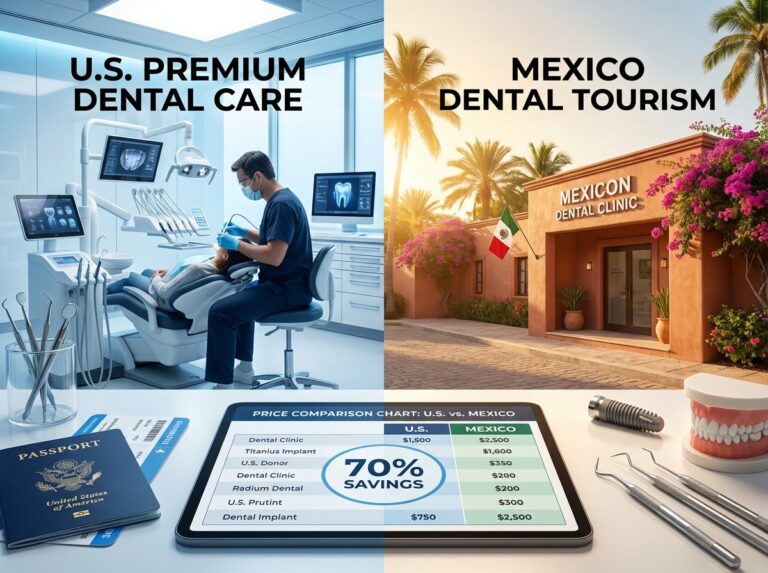
While prices vary by clinic and location, the potential savings remain the primary driver for dental tourism. Here are some estimated cost comparisons for 2024-2025. Always confirm current pricing directly with the clinic.
- Exam, Cleaning, and X-Rays: US $200 – $400 | Mexico $50 – $90
- Porcelain-Fused-to-Metal Crown: US $1,200 – $2,500 | Mexico $250 – $500
- Single Dental Implant (with abutment and crown): US $3,500 – $6,000 | Mexico $900 – $1,800
- Root Canal (Molar): US $1,200 – $2,000 | Mexico $350 – $600
- All-on-4 Restoration (per arch): US $25,000 – $40,000 | Mexico $8,000 – $15,000
Final Takeaways and Recommended Next Steps
After navigating the complexities of insurance policies and cross-border logistics, it’s time to pull everything together. The journey to affordable dental care in Mexico is absolutely achievable, but it hinges on a clear understanding of the landscape and meticulous planning. Let’s distill all the information into the most critical takeaways and a concrete action plan to guide your decision.
The fundamental truth is this: your US dental insurance was not designed to cover routine or elective procedures in Mexico. Insurers operate within specific domestic networks, and foreign clinics are almost always outside this system. While the dream of having your PPO pay for a full set of veneers in Cancun is appealing, it’s not the reality for the vast majority of patients. The system is built to serve US-based providers, a fact reflected in the massive US dental insurance market.
Here are the most important points to remember:
- Routine Care is Out-of-Pocket: Expect to pay for planned procedures like crowns, implants, bridges, and cosmetic work yourself. The significant cost savings in Mexico are the primary financial benefit, not insurance reimbursement.
- “Emergency” is Narrowly Defined: Your insurer may offer some reimbursement for a true, unforeseen dental emergency that occurs while you’re traveling. This means a sudden abscess, a traumatic injury to a tooth, or acute infection. It does not mean a toothache you’ve had for months that finally becomes unbearable during your vacation. Getting this covered requires a mountain of documentation after the fact.
- Travel Insurance is for Accidents, Not Plans: A separate travel insurance policy can be a lifesaver, but only for unexpected medical or dental emergencies. It will not cover any treatment you went to Mexico specifically to receive. Think of it as a safety net for trip interruptions or accidents, not a funding source for your dental work.
- You Are the Project Manager: Success depends entirely on your diligence. From verifying a dentist’s credentials and sterilization protocols to arranging your travel and post-operative care, the responsibility falls on you. Careful vetting and proactive planning are not optional; they are essential to ensuring a safe and positive outcome.
With these realities in mind, here is a prioritized, step-by-step checklist to follow if you decide to move forward.
- Verify Insurance in Writing: Before you do anything else, call your insurance provider. Speak directly about their policy on “out-of-country emergency dental care.” Ask what documentation they require for a reimbursement claim. Then, follow up with an email summarizing the call and ask for a written reply confirming their policy. This document is your proof. A verbal “yes” over the phone is not enough.
- Obtain Your Complete US Dental Records: Contact your current dentist and request your full file. This must include recent panoramic X-rays, any CBCT scans (especially for implants), and your treatment history. You will need to send these digital files to prospective clinics in Mexico for an accurate remote consultation and quote.
- Get a Written Treatment Plan and Warranty: After vetting and choosing a clinic, get a formal, detailed treatment plan. It should list every procedure using American Dental Association (ADA) CDT codes, the exact cost for each, the materials to be used (e.g., brand of implant, type of ceramic), the timeline, and the clinic’s written warranty on their work.
- Arrange Travel and Post-Op Care: Book your flights and accommodations, but also plan your recovery. How will you get from the clinic to your hotel after sedation? Who will check on you? Critically, have a plan for follow-up care once you return to the US. This might involve finding a local dentist willing to handle simple check-ups or suture removal.
- Consider Supplemental Insurance: If you’re concerned about travel disruptions or a potential medical emergency unrelated to your planned dental work, purchase a comprehensive travel insurance policy that includes medical evacuation coverage. Read the fine print on the dental emergency rider to understand its limits and exclusions.
- Keep Meticulous Records: Save everything. This includes itemized receipts from the clinic, proof of payment (credit card statements), travel itineraries, and all correspondence with both the clinic and your US insurer. If you do file an emergency claim, this paper trail will be non-negotiable.
Ultimately, deciding whether to pursue dental treatment in Mexico is a personal risk/benefit calculation.
You might be an excellent candidate for dental tourism if you need extensive, high-cost work like multiple implants or a full-mouth reconstruction, where the savings can reach tens of thousands of dollars. It’s a good path if you are a diligent researcher, comfortable with international travel, and prepared to manage the logistics yourself, understanding that you are primarily a self-pay patient.
On the other hand, seeking alternatives in the US may be a better choice if you only need minor or routine work, if your domestic insurance provides decent coverage, or if the thought of navigating a foreign healthcare system creates significant anxiety. The convenience, regulatory oversight, and straightforward legal recourse of staying home can provide peace of mind that, for some, is worth the higher price tag.
Sources
- Mexico Dental Insurance Market 2033 – IMARC Group — The Mexico dental insurance market size reached USD 3.03 Billion in 2024. Looking forward, IMARC Group expects the market to reach USD 6.02 Billion by 2033, …
- Mexico Dental Insurance Market Size & Outlook, 2023-2030 — The Mexico dental insurance market generated a revenue of USD 1,625.4 million in 2023 and is expected to reach USD 2,516.8 million by 2030. The Mexico market is …
- Why Dental Tourism in Mexico is Growing in 2025 — Learn trusted facts about dental care costs, U.S. dental health statistics, and how Mexico offers affordable, high-quality dental treatments with expert care.
- Health and Dental Insurance Market in Mexico: Key Facts and Figures — As of September 2024, the combined market for health and dental insurance plans in Mexico recorded a total revenue of 10.46 billion pesos, …
- Dental Insurance in the US Industry Analysis, 2025 – IBISWorld — Industry revenue is expected to increase at a CAGR of 5.2% to $117.7 billion over the five years to 2025, including an increase of 3.8% in 2025 alone. Propelled …
- Dental Implants USA vs. Mexico: The Truth in 2025 – The Town Dentist — Explore the pros and cons of dental implants in the USA vs. Mexico in 2025. Learn why choosing The Town Dentist in Paramus and Englewood, …
- Dental Insurance Market Size, Key Players and Competitive Insights — The U.S. dental insurance market size is to rise from USD 90.02 billion in 2024, grew to USD 97.97 billion in 2025, and is projected to soar around USD 209.46 …
- Dental Insurance Market Size, Share & Growth, 2033 — The global dental insurance market is expected to reach USD 256.02 billion in 2025 and grow at a CAGR of 9.5% to reach USD 529.16 billion by …
- Dental Insurance Market Report 2025, Trends And Growth By 2034 — The dental insurance market size has grown strongly in recent years. It will grow from $197.24 billion in 2024 to $215.44 billion in 2025 at a compound annual …
Legal Disclaimers & Brand Notices
Medical Disclaimer: The content of this article is provided for informational purposes only and is not intended to be a substitute for professional medical advice, diagnosis, or treatment. It discusses complex medical procedures, risks, and recovery protocols related to dental care. Always seek the advice of a qualified healthcare provider or licensed professional with any questions you may have regarding a medical condition, treatment plan, or insurance coverage.
Regulatory and Financial Notice: Information regarding insurance coverage (PPOs, HMOs, Medicare, Medicaid) and international travel regulations is subject to change. Readers should verify all policy details, coverage limitations, and travel advisories directly with their insurance provider and relevant government authorities before making any travel or treatment decisions.
Trademark Acknowledgement: All product names, logos, and brands mentioned, including Nobel Biocare, Straumann, CareCredit, Medicare, and Medicaid, are the property of their respective owners. Their use in this article is for identification and informational purposes only and does not imply endorsement or affiliation.