Considering All-on-4 full-arch dental implants in Mexico to save money compared with U.S. prices? This guide breaks down how All-on-4 works, realistic price comparisons, quality indicators, travel and recovery logistics, and safety checkpoints. Read on for a step-by-step decision framework, practical checklists, and tips to maximize savings while minimizing risk when planning treatment abroad.
What All-on-4 Implants Are and Why U.S. Patients Consider Mexico
The All-on-4 dental implant technique has changed how dentists approach full mouth reconstruction for patients with significant tooth loss. This method uses four dental implants to support an entire arch of permanent teeth. It is a specific surgical protocol that differs from traditional methods. In a standard implant process, a dentist might use six to eight implants per arch, often requiring bone grafting to ensure sufficient support. The All-on-4 approach utilizes existing bone more efficiently: two implants are placed vertically in the front, while two are placed at an angle in the back. This tilting allows the dentist to avoid the sinus cavities in the upper jaw and the nerve canals in the lower jaw.
Patients who have lost all their teeth or have a failing dentition are the primary candidates for this procedure. It is often called an “immediate load” prosthesis. This means a temporary bridge is typically attached to the implants on the same day as the surgery. Patients leave the office with a functional set of teeth rather than waiting months for healing without them. This is a major advantage over traditional dentures or older implant methods. Traditional dentures can slip and make eating difficult. Implant-supported overdentures, often called snap-ins, are removable and require fewer implants but do not offer the same stability as a fixed bridge. The All-on-4 bridge is permanent and stays in the mouth at all times.
The clinical benefits of this system are well documented. It provides a high level of stability for chewing and speaking and helps preserve the jawbone by providing stimulation similar to natural tooth roots. However, there are limits to the procedure. The success of the treatment depends heavily on the quality of the prosthetic materials and the skill of the surgeon. If the bridge is made of lower quality acrylic, it may wear down or chip over time. Many patients now opt for monolithic zirconia for the final bridge because of its superior strength.
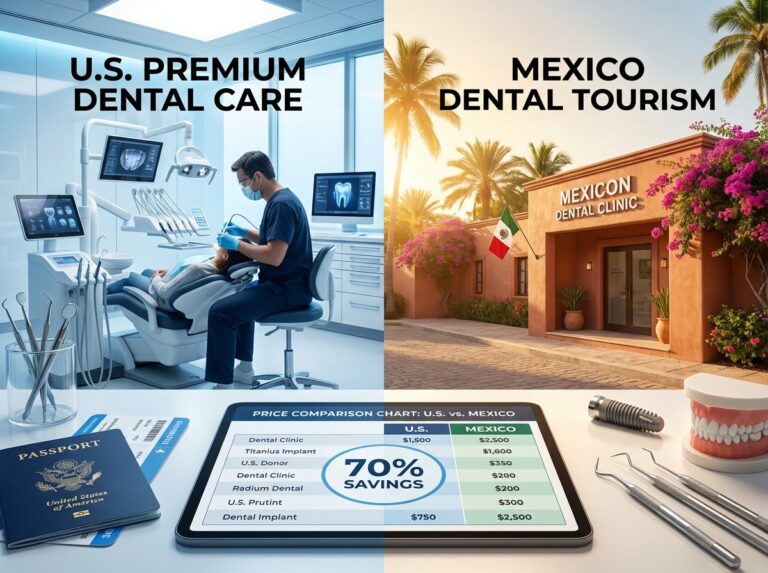
Many people in the United States now look toward Mexico for this specific treatment. The primary motivation is the significant price difference. In the United States, the cost for a single arch of All-on-4 implants often ranges from $25,000 to $45,000. In Mexico, the price for the same procedure is typically between $8,000 and $15,000. You can see a detailed breakdown of these figures at Dental Implant Cost in 2025: U.S. vs. Mexico. These savings allow patients to receive high-quality care that they might otherwise find unaffordable at home.
Geographic proximity makes Mexico a convenient choice for Americans. Border cities like Los Algodones or Tijuana are easily accessible by car for those in the Southwest. Other patients fly into major hubs like Cancun or Mexico City. These cities host high-volume clinics that specialize in dental tourism. Because these clinics perform hundreds of All-on-4 procedures every year, they often possess advanced technology like on-site dental labs and 3D imaging. Many of these facilities employ bilingual staff and dentists who received training in the United States or Europe.
Clinical data through 2025 indicates that the survival rate for All-on-4 implants remains very high. Most studies indicate a success rate of over 95 percent for the implants themselves over a ten-year period. The success of the prosthetic bridge is also high, provided the patient maintains good oral hygiene. These outcomes are comparable to those found in U.S. clinics when the Mexican dentist uses reputable implant brands like Nobel Biocare or Straumann.
Patient motivations often go beyond just the base price. Many Mexican clinics offer package deals that include transportation from the airport and hotel stays, reducing the stress of planning a medical trip. The speed of treatment is another factor. In the U.S., the process can take many months due to scheduling and lab wait times. Mexican clinics catering to international patients often prioritize efficiency to fit the treatment into a one-week or two-week window.
Patient Examples
The Retired Couple on a Fixed Income
James is a 70-year-old retiree living in Florida. He has struggled with loose dentures for a decade. His local dentist quoted him $60,000 for a full mouth restoration—more than his entire savings. James researched clinics in Cancun and found a reputable surgeon. He paid $24,000 for both arches, including his travel costs. He now enjoys a full diet and no longer uses denture adhesives.
The Working Professional with Failing Teeth
Maria is 48 and lives in California. She has advanced periodontal disease and her remaining teeth are shifting. She needs a solution that looks natural and can be done quickly so she does not miss much work. She chose a clinic in Tijuana because she could drive across the border. She received her extractions and temporary bridge in two days. The total cost was $11,000, a fraction of the $32,000 quote she received in San Diego.
While success rates are high, not everyone is a good candidate for All-on-4 implants. Certain health conditions can increase the risk of failure. Uncontrolled diabetes is a major concern because it slows the healing process and increases the risk of infection. Heavy smoking is another significant risk factor; it reduces blood flow to the gums and can prevent the bone from bonding with the implant. Patients with severe bruxism (grinding or clenching teeth) may put too much pressure on the bridge, leading to implant loosening or bridge fracture.
Insufficient bone density can also be a hurdle. While the All-on-4 technique is designed to work with less bone than traditional methods, there must still be enough to anchor the four implants. If the bone loss is too severe, the dentist might suggest bone grafting or zygomatic implants, which anchor into the cheekbones.
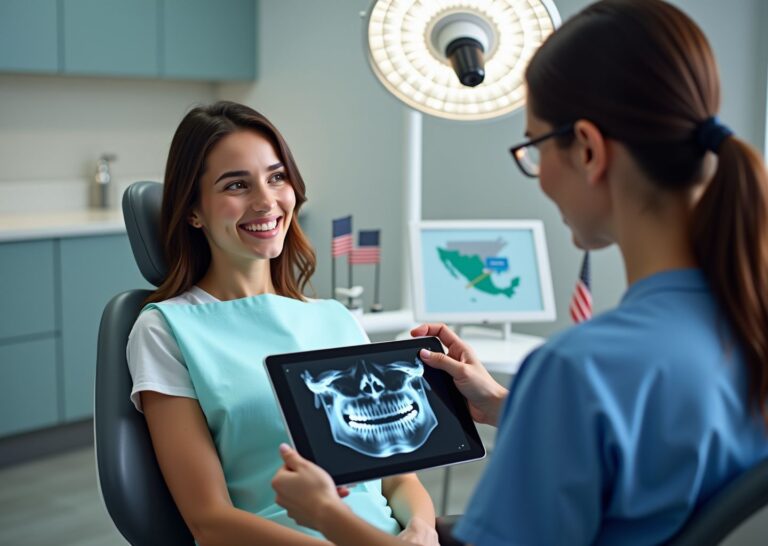
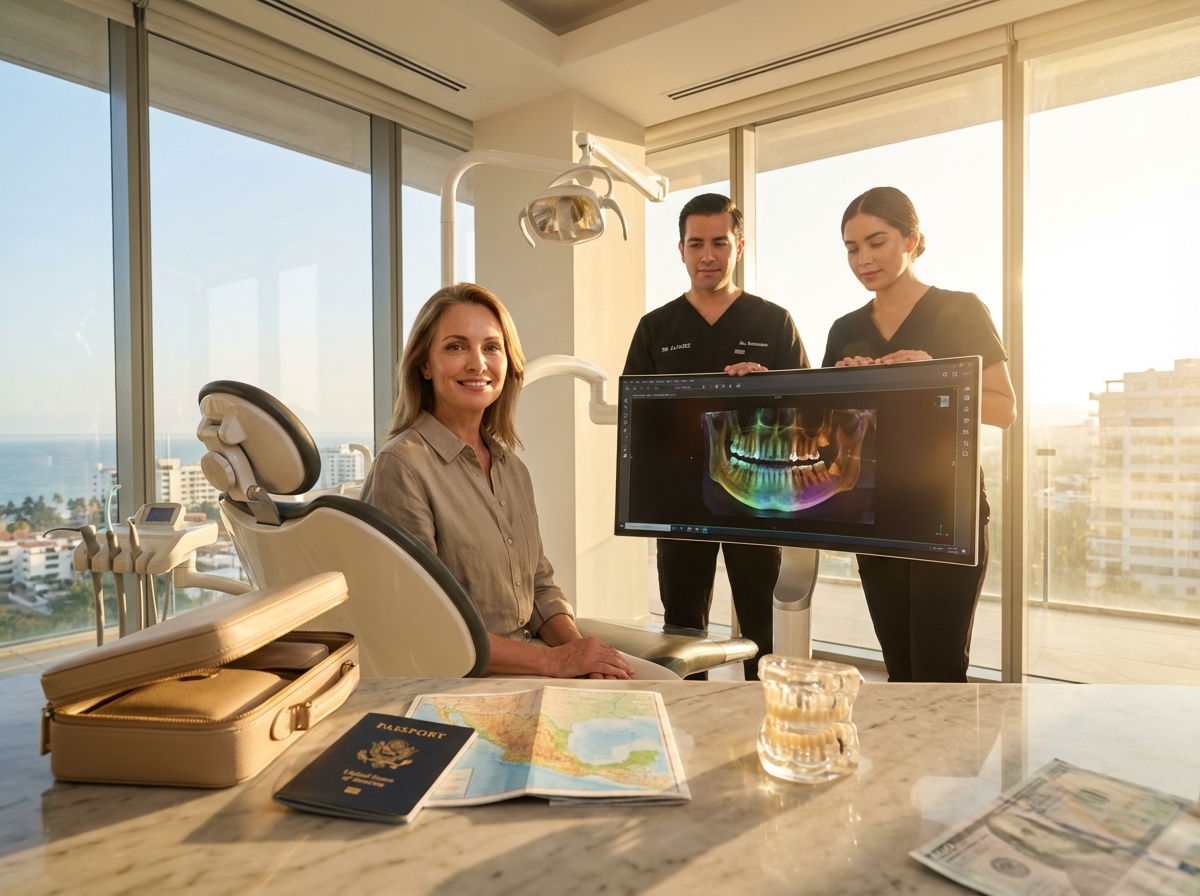
It is vital to seek a virtual consultation before making any travel arrangements. Most professional clinics in Mexico will ask for a recent CBCT scan or 3D X-ray. This allows the surgeon to evaluate the bone structure and create a precise treatment plan. You should verify that the clinician is credentialed by organizations like the International Congress of Oral Implantologists. Checking these details in advance ensures that the treatment plan is realistic and that the quoted price is accurate for your specific needs.
Real cost comparison and how savings really add up
Understanding the price gap between American dental offices and Mexican clinics requires looking at more than just the final number on a quote. In the United States, the average cost for a single arch of All-on-4 implants typically falls between $25,000 and $45,000. Some high-end practices in major cities charge even more. In contrast, reputable clinics in Mexico offer the same procedure for $8,000 to $15,000 per arch. This price difference exists because of lower overhead costs, cheaper real estate, and different insurance structures in Mexico. It does not automatically imply a lower standard of care.
Itemized Cost Breakdown
Consultation and Diagnostics
In a U.S. clinic, you can expect to pay $300 to $600 for the initial exam and a 3D CBCT scan. Many Mexican clinics provide the initial consultation and the scan for free or for a nominal fee of around $150. This scan is vital for planning the implant placement and assessing bone density.
Surgical Fees and Extractions
Surgical labor in the U.S. accounts for a large portion of the bill, often ranging from $10,000 to $15,000 per arch. In Mexico, these fees are significantly lower, usually between $3,000 and $5,000. If you have failing teeth that need to be removed, U.S. dentists charge $200 to $500 per tooth. Mexican dentists typically charge $50 to $150 per extraction. For a full arch, these savings add up quickly.
Implant Brands and Hardware
The brand of the implant affects the price. Premium brands like Nobel Biocare or Straumann have higher wholesale costs. Using these brands in the U.S. might add $2,000 to your total. In Mexico, many top clinics use these same premium brands to maintain high success rates. Some clinics offer economy brands like Neodent or Hiossen to lower the price further. Choosing a premium brand in Mexico might bring your total to $12,000, while an economy brand might keep it closer to $9,000.
Prosthetic Materials
The All-on-4 process involves two bridges. The first is a provisional acrylic bridge placed on the day of surgery. The second is the final, permanent bridge placed about six months later. In the U.S., a high-quality monolithic zirconia bridge with a titanium bar can cost $10,000 on its own. In Mexico, this same final prosthesis usually costs between $3,000 and $5,000. Zirconia is preferred for its durability and resistance to staining compared to cheaper acrylic options.
Anesthesia and Medications
Intravenous sedation in the U.S. is often billed by the hour, costing $500 to $1,000. In Mexico, sedation is often included in the package price or offered at a flat rate of $400 to $600. Post-operative medications like antibiotics and pain relievers are also much cheaper in Mexico, often costing less than $50 total.
The Real Cost of Travel
To calculate true savings, you must include travel expenses. Most All-on-4 treatments require two separate trips. The first trip is for the surgery and the temporary bridge, usually lasting 7 to 10 days. The second trip occurs six months later for the final bridge fitting, lasting about 5 to 7 days.
Travel Expense Estimates
Roundtrip flights from the U.S. to cities like Cancun or Los Algodones average $400 to $800 per person. Hotel stays for 15 total nights can cost $1,500 to $2,250 depending on the level of luxury. Meals and local transportation might add another $1,000. If you bring a companion for support, you should double the flight and meal costs. Even with $4,000 in travel expenses, the net savings remain substantial for most patients.
Financial Scenarios
Scenario One: The Straightforward Case
This patient has already lost their teeth or has very few remaining. They have good bone density and do not need grafting. In the U.S., they receive a quote for $30,000 for one arch. In Mexico, the procedure costs $10,000. After adding $3,500 for two trips and a $1,000 contingency buffer for unexpected needs, the total Mexico cost is $14,500. The net savings are $15,500. This represents a 50 percent discount even after all travel is paid.
Scenario Two: The Complex Case
This patient requires twelve extractions and significant bone grafting or a sinus lift. In the U.S., the total price climbs to $45,000 due to the complexity. In Mexico, the clinic charges $14,000 for the premium implants and the extra surgical work. The patient travels with a spouse, increasing travel costs to $5,500. With a $1,500 contingency fund, the total spent is $21,000. The savings are still $24,000. While the percentage of savings is slightly lower, the absolute dollar amount saved is higher than in the simple case.
Quality and Warranty Considerations
The cheapest quote in Mexico is not always the best value. A very low price might indicate the use of a local dental lab with lower standards or generic implant parts. It is important to ask if the clinic uses a monolithic zirconia bridge or a cheaper acrylic hybrid. Zirconia lasts longer and looks more natural. You should also check the warranty policy. Reputable Mexican clinics offer multi-year warranties on the hardware. However, you must remember that a warranty usually requires you to fly back to Mexico for the repair. This is why many patients set aside a contingency buffer in their budget. According to current 2025 price data, the most reliable savings come from mid-range Mexican clinics that prioritize brand-name materials and modern lab technology. Choosing a clinic based solely on the lowest price can lead to higher costs later if the prosthesis fails or the implants do not integrate properly.
| Service Component | Typical U.S. Price (2025) | Typical Mexico Price (2025) |
|---|---|---|
| CBCT Scan and Consultation | $450 | $100 |
| Surgical Placement (4 Implants) | $18,000 | $6,000 |
| Provisional Bridge (Immediate) | $4,000 | $1,500 |
| Final Zirconia Bridge | $10,000 | $4,000 |
| Extractions and Grafting | $3,500 | $1,200 |
| Total Procedure Cost | $35,950 | $12,800 |
The financial advantage of traveling to Mexico is clear for those needing full-arch restoration. While the U.S. offers the convenience of local follow-ups, the price gap of $20,000 or more per arch makes Mexico a viable alternative for many. Patients should focus on the total value, including the quality of the lab and the reputation of the surgeon, rather than just the lowest sticker price. For a deeper look at how these costs compare across different regions, you can review this detailed cost analysis for the current year.
Assessing quality credentials and the clinic selection checklist
Choosing a dentist for a full mouth restoration requires more than just looking at a price tag. While the savings in Mexico are significant, the success of your All-on-4 procedure depends on the skill of the clinical team. You need to verify that the dentist holds a proper degree such as a Doctor of Dental Surgery (DDS) or a Doctor of Dental Medicine (DMD). These degrees ensure they have completed the foundational medical education required for dental practice. For a complex procedure like All-on-4, you should look for specialists. A prosthodontist focuses on the replacement of teeth and the restoration of oral function. An oral surgeon has the surgical expertise to handle bone grafting and implant placement.
Professional memberships offer another layer of verification. Look for dentists who belong to the American Academy of Implant Dentistry (AAID) or the International Congress of Oral Implantologists (ICOI). These organizations require members to meet specific standards of education and experience in implantology. Membership in local groups like the Asociacion Mexicana de Implantologia Bucal shows the dentist is active in the professional community in Mexico. You should also ask for documentation of their training with specific branded implant systems like Nobel Biocare or Straumann.
The regulatory environment in Mexico is managed by COFEPRIS. This is the federal agency responsible for health regulation, functioning similarly to the FDA in the United States. Every legitimate dental clinic must have a COFEPRIS permit displayed. This permit ensures the facility meets basic health and safety standards. Some larger clinics or those located within medical centers might hold a Joint Commission International (JCI) accreditation, a prestigious gold standard for hospital quality. It is important to understand that the American Dental Association (ADA) does not license or oversee clinics outside the United States. If a clinic claims to be ADA approved, they are likely just international members. This membership does not mean the ADA has inspected their facility.
The Essential Verification Checklist
Before and After Portfolio
Request a comprehensive portfolio of previous All-on-4 cases. Look for high-resolution photos that include date stamps. This helps you confirm the work is recent and consistent. Avoid clinics that only show stock photos or images that look heavily edited. You want to see the actual results achieved for patients with similar dental issues.
Verifiable Patient Testimonials
Ask the clinic for references you can contact. Speaking with a past patient from the U.S. can provide insights into the travel experience and the long-term durability of the implants. Check independent review platforms rather than relying only on the testimonials posted on the clinic website.
Diagnostic Records and Images
A quality clinic will use a Cone Beam Computed Tomography (CBCT) scan for every All-on-4 case. This 3D imaging is necessary for precise implant placement. Ask to see sample operative photos and how they use these scans to plan the surgery. If a clinic only uses traditional 2D X-rays for full mouth restorations, it is a major red flag.
Detailed Treatment Plan
You should receive a full written treatment plan before you travel. This document must include a breakdown of all materials and brands. It should specify if you are getting a provisional acrylic bridge or a final monolithic zirconia bridge. The plan must list the number of implants and any necessary extractions or bone grafting. You can compare these details with the All-on-4 dental implants Mexico vs. U.S. costs to ensure the quote is transparent.
Laboratory Information
The quality of your new teeth depends on the dental lab. Ask which lab the clinic uses and where it is located. Some top-tier clinics have in-house labs with CAD/CAM technology. This allows for faster adjustments and better quality control. Knowing the lab partner helps you verify the source of the materials used in your prosthesis.
Sterilization and Safety Protocols
Request photos or a video tour of the sterilization area and the operatory. The clinic should follow international standards for infection control. Look for modern autoclaves and a clean, organized environment. This is a critical step to prevent complications like infections after surgery.
Informed Consent and Warranty
All legal documents and consent forms must be provided in English. Read the warranty policy carefully. A good warranty should cover the implant hardware and the prosthetic bridge for several years. It should clearly state what happens if an implant fails to osseointegrate. You also need a written contingency plan that explains how the clinic handles unexpected complications during or after the procedure.
Communicating with the Surgical Team
Request a video call with the treating surgeon and the lead lab technician before booking your trip. This allows you to gauge their communication skills and ask specific questions about your case. You should ask which implant brand they use and why they chose it for you. Inquire about the prosthetic workflow and how many days you will need to stay for the initial phase. Confirm if they have a network of dentists in the U.S. for follow-up care or if you must return to Mexico for every adjustment.
Sample Questions and Satisfactory Answers
| Question for the Clinic | What a Satisfactory Answer Looks Like |
|---|---|
| What happens if an implant fails after I go home? | The clinic offers a clear warranty that covers replacement costs and explains the process for returning for repair. |
| Can I see the serial numbers for my implants? | Yes, we provide a patient implant card with the brand, model, and serial numbers for your permanent records. |
| How many All-on-4 procedures do you perform each month? | The surgeon performs this specific procedure multiple times a week and has a dedicated team for full mouth cases. |
| Who manufactures the final bridge? | We use a specific reputable lab or our in-house facility using high grade zirconia or titanium. |
Online reviews and social media content require careful interpretation. Look for detailed accounts of the patient experience rather than short, generic praise. Be wary of clinics that have a sudden surge of positive reviews in a short period, as this can sometimes indicate paid promotions. Independent second opinions are highly recommended. You can take your Mexican treatment plan to a local U.S. dentist to discuss the technical details. While some U.S. dentists may be biased against dental tourism, a professional will give you an honest assessment of the proposed surgical approach. Researching dental implants in Mexico vs USA cost comparison guides can also help you understand the standard of care expected at different price points. Always prioritize clinical expertise and safety protocols over the lowest possible price.
Planning logistics treatment timeline and postoperative care
Successful dental restoration in Mexico requires more than just finding a skilled surgeon. You must manage the logistics of two separate trips and a lengthy healing period. Preparation starts at home. You need to gather your complete dental records. This includes recent panoramic X-rays and a CBCT scan. These digital files allow the clinic to evaluate your bone volume before you book a flight. You should also provide a full list of your current medications. Include supplements and vitamins. Disclose your entire medical history. Conditions like uncontrolled diabetes or heart disease can impact your candidacy for All-on-4 dental implants in Mexico. Clear photos of your teeth and gums from several angles are also helpful for the initial assessment.
The Virtual Consultation and Written Estimate
Most reputable clinics offer a virtual consultation. Use this video call to discuss your goals. You must request a clear written estimate. This document should break down every cost. It must include extractions, the implants, the temporary bridge, and the final prosthesis. Ensure you receive a copy of the informed consent forms in English. Review these documents carefully before you commit. You should also confirm which implant brands the clinic uses. High-quality systems like Nobel Biocare or Straumann are standard for successful outcomes.
Choosing a Hub and Booking Travel
Mexican dental tourism centers around several major hubs. Tijuana and Los Algodones are popular for their proximity to the U.S. border. Many patients choose to walk across the border for their appointments to avoid vehicle lines. Cancun and Puerto Vallarta offer a resort atmosphere, while Guadalajara is known for high-end medical facilities. When you book your travel, align it with clinic availability. For the first visit, plan a stay of 7 to 14 days. This window is necessary for the surgery and immediate follow-up checks. The surgeon needs to monitor the initial healing and ensure the provisional bridge fits correctly.
The Two Visit Workflow
The All-on-4 process typically requires two main trips to Mexico.
- First Visit
This trip involves the surgical placement of four implants per arch. The dentist usually attaches a provisional, immediate load bridge within 24 to 48 hours. You will stay for about ten days to ensure there are no early complications. - Healing Phase
You will return home for 3 to 6 months. During this time, the implants undergo osseointegration. This means they fuse with your jawbone. You must wear the temporary bridge and follow a strict diet. - Second Visit
Once the implants are stable, you return to Mexico. The dentist takes final impressions. A dental lab creates your permanent bridge. This visit usually lasts 7 to 10 days.
Postoperative Care and Diet
Recovery requires discipline. You will likely receive prescriptions for antibiotics and pain medication. Follow the dosage instructions exactly. Swelling and bruising are normal for the first week. You must stick to a liquid or very soft food diet for the first few months. Avoid anything crunchy, chewy, or hard. This prevents excessive pressure on the healing implants. You should also avoid smoking. Tobacco use significantly increases the risk of implant failure. Watch for signs of complications like persistent fever, extreme pain, or a loose provisional bridge. If these occur, contact your Mexican clinic immediately.
Coordinating with a U.S. Dentist
It is vital to have a local backup. Many U.S. dentists are hesitant to work on foreign implants. You should find a local professional who is willing to provide emergency care or basic maintenance. Secure a digital copy of your surgical report from the Mexican clinic. This report must include the brand, model, and serial numbers of your implants. It should also list the abutment sizes. This information allows a U.S. dentist to order the correct tools if an adjustment is needed. Clear communication between your Mexican surgeon and your local dentist can prevent many headaches.
Travel Logistics and Safety
Check the current travel advisories from the U.S. State Department before you book. Ensure your passport is valid for at least six months beyond your travel dates. If you are driving to border towns like Tijuana, be prepared for long wait times. Some clinics provide a medical pass to use the faster lanes. You should also consider travel insurance. Look for policies that specifically cover medical complications abroad. Some specialized providers offer medical evacuation coverage. This is a small price for peace of mind.
Packing and Companions
Pack all your dental records and a list of emergency contacts. Bring enough of your regular medications for the entire trip. It is helpful to bring a companion. You will be groggy after surgery and might need help with meals or transportation. Your companion can also help track your medication schedule. If you are traveling alone, ask the clinic if they provide recovery assistance or transportation services. Many clinics in dental implants in Mexico hubs offer shuttle services from the airport or border. This makes the logistics much simpler for international patients.
Frequently Asked Questions: common patient concerns and answers
Is it safe to get All-on-4 in Mexico?
Safety Standards and Credentials
Safety in Mexico depends entirely on your choice of provider. Many specialists in major dental hubs like Los Algodones or Cancun receive training in the United States and hold memberships in the American Academy of Implant Dentistry. You must verify that the clinic is registered with COFEPRIS, the Mexican federal agency that regulates medical facilities. Next Steps: Request the specific license number of your oral surgeon and verify their credentials through the Mexican Dental Association website. Risk Mitigation: Choose a clinic that uses 3D CBCT scanning for every patient to prevent nerve damage during surgery. Avoid dental tourism if you have uncontrolled diabetes or severe autoimmune issues, as these conditions significantly increase the risk of implant failure regardless of the location.
How much can I realistically save?
Cost Comparison Data
Patients typically save between 60% and 75% compared to U.S. prices. While U.S. costs range from $25,000 to $45,000 per arch, data on All-on-4 Dental Implants Mexico vs. U.S. Costs shows Mexican prices ranging from $8,000 to $15,000. Next Steps: Get a line-item estimate that explicitly includes the final permanent bridge, not just the temporary one. Risk Mitigation: Do not choose the lowest price available. Extremely low quotes often indicate the use of generic implant parts or low-quality lab materials.
What affects the final price?
Variables in Treatment Planning
The material of the final bridge is the biggest price driver. Acrylic bridges with a titanium bar are the most affordable, while zirconia bridges cost more but offer superior durability. Bone grafting and sinus lifts add to the total if your jawbone is thin. Extractions of remaining teeth also incur separate fees. Next Steps: Ask if the quote includes the “healing abutments” and the final prosthetic. Risk Mitigation: Request a “fixed price” contract to prevent unexpected charges if the surgeon discovers a need for minor bone grafting during the procedure.
Will U.S. dental insurance cover it?
Insurance Reimbursement Realities
Most Mexican clinics do not bill U.S. insurance companies directly. You must pay the clinic upfront and then submit a claim for reimbursement. Many U.S. plans have an annual maximum of $1,500 to $2,500, which covers only a small fraction of the All-on-4 cost. Next Steps: Contact your insurance provider before traveling to ask for an “out-of-network” claim form. Risk Mitigation: Ensure the Mexican clinic provides an itemized receipt in English using standard ADA procedure codes for the claim to be processed.
What if I have complications after returning home?
Post-Operative Support
Minor issues like bite adjustments are common, but major complications like implant failure require a return trip to Mexico. Most U.S. dentists will not touch an implant placed by another doctor due to liability concerns. Next Steps: Identify a “backup” dentist in your home city who is willing to handle emergencies. Risk Mitigation: Purchase specialized medical tourism insurance. Policies from companies like Global Protective Solutions cover the cost of travel and corrective care if a complication occurs.
How long does the whole process take?
Treatment Timeline
The All-on-4 process requires two distinct phases. The first trip lasts 7 to 14 days for implant placement and the temporary bridge. You then wait 4 to 6 months for osseointegration. The second trip lasts about 7 to 10 days to fit the final permanent bridge. Next Steps: Clear your schedule for the full duration of the first trip; do not try to fly home the day after surgery. Risk Mitigation: Allow a buffer of two days at the end of your trip to give the dentist time to fix any discomfort in the temporary bridge before you leave.
Do implant brands matter?
Hardware Quality
Brand names matter for long-term maintenance. Nobel Biocare created the original All-on-4 protocol, and Straumann and Hiossen are also top-tier choices. If you use a generic brand, a U.S. dentist might not have the specific tools to tighten a loose screw later. Next Steps: Demand a “Global Implant Passport” or a certificate showing the brand and serial numbers. Risk Mitigation: Only accept brands with a global presence to ensure you can find parts in any country for decades to come.
Are hospital facilities needed for complex cases?
Surgical Environment
Most All-on-4 procedures happen in a specialized dental clinic under IV sedation, which is standard and safe for healthy patients. However, if you have significant heart disease or morbid obesity, you may need a hospital setting. Next Steps: Disclose your full medical history during the virtual consultation. Risk Mitigation: If the dentist suggests a hospital, ensure the facility is accredited by the Joint Commission International. If your health is fragile, the risks of travel might outweigh the savings.
Will my U.S. dentist accept the work?
Professional Cooperation
Many U.S. dentists are hesitant to provide follow-up care for work done abroad, often referring to these as “orphan patients.” It is difficult for them to guarantee work they did not perform. Next Steps: Be honest with your local dentist about your plans and ask if they will provide routine cleanings for the implants. Risk Mitigation: If your local dentist refuses, look for a prosthodontist in your area, as they are specialists more familiar with various implant systems.
Is there a warranty and how does it work?
Guarantees and Limitations
Reputable Mexican clinics offer warranties ranging from 5 years to a lifetime on the hardware. However, these warranties usually require you to return to the clinic in Mexico for the repair and rarely cover airfare or hotels. Next Steps: Get the warranty terms in writing before you pay. Check if the warranty is void if you do not get professional cleanings every 6 months. Risk Mitigation: Keep all your records and X-rays. A warranty is only useful if the clinic stays in business, so choose a practice that has been operating for at least 10 years.
What is the total landed cost?
Hidden Expenses
The “sticker price” of the dental work is not your final cost. You must factor in flights, hotels, meals, and local transportation. For two trips, these costs can add $2,000 to $4,000 to the total. According to the Dental Implant Cost in 2025 guide, even with travel, the savings remain substantial. Next Steps: Create a spreadsheet for all travel expenses. Risk Mitigation: Set aside a $1,500 “contingency fund” to cover an extra week of hotel stay if your healing takes longer than expected.
Final recommendations: decision checklist and next steps
Moving forward with a major dental procedure requires a clear plan. You need to weigh the financial benefits against the logistical demands of traveling abroad. This guide provides a structured way to make your final choice.
Actionable Decision Checklist
Medical Candidacy Assessment
Your first step is to talk to your primary care doctor. You must ensure your body can handle surgery and anesthesia. Issues like uncontrolled diabetes or heavy smoking can lead to implant failure. Ask your doctor for a summary of your health status to share with potential dentists. This prevents surprises once you arrive at a clinic.
Record Collection
Gather your recent dental records, including 3D CT scans and high-resolution X-rays. Most Mexican clinics require these files to give you an accurate quote. If you do not have them, you might pay for a consultation only to find out you need bone grafting. Having these files ready allows for a more precise remote evaluation.
Remote Consultations
Seek at least two remote consultations: one from a local U.S. dentist and one from a highly rated Mexican clinic. This gives you a baseline for comparison. Review the Dental Implant Cost in 2025: U.S. vs. Mexico guide to understand the market rates. Comparing these quotes side by side helps you identify exactly where the savings come from (labor, lab fees, or materials).
Side by Side Plan Comparison
Review the written plans carefully. Look at the brand of the implants; top-tier brands like Nobel Biocare or Straumann are preferred because they have global support. Check the materials for the final bridge—zirconia is more durable than acrylic but costs more. Ensure the quote includes all fees like extractions, temporary dentures, and the final restoration. Ask about the warranty terms; a good clinic should offer a written guarantee on the hardware.
Total Landed Cost Calculation
The dental bill is only one part of the expense. Calculate your total landed cost, including round-trip flights, hotel stays for two separate trips, meals, and local transportation. Add a contingency fund of at least twenty percent. This covers unexpected costs like extra nights in a hotel if the lab work takes longer than planned. You can find more about these hidden costs at All On 4 Implants Cost Mexico [Cost Comparison] – A1 Smile Design.
Clinic and Lab Verification
Verify the credentials of the dentist. They should have specific training in implantology. Ask if the clinic has an in-house lab. Clinics with their own labs can often make adjustments faster, reducing the time you spend waiting in a hotel room. If they use an outside lab, ask for the name of the facility and check its reputation. Digital workflows like CAD/CAM technology are a sign of a modern practice.
Follow Up Care Plan
Decide who will handle your maintenance. All-on-4 implants require professional cleaning every six months. Some U.S. dentists are hesitant to work on implants placed abroad. Find a local dentist who is willing to perform routine maintenance before you commit to the trip. This ensures your investment stays healthy for years.
Insurance and Protection
Purchase specialized medical tourism insurance. Standard travel insurance rarely covers dental complications. These specific policies can cover the cost of returning to Mexico if a repair is needed. They also provide coverage for medical emergencies related to the surgery. Save all communications and contracts in writing. Do not make large deposits until you have a signed agreement that outlines the full scope of work.
Risk and Benefit Summary
| Factor | Potential Benefit | Potential Risk |
|---|---|---|
| Financial | Savings of 60 to 75 percent compared to U.S. prices. | Costs for travel and repairs can add up if issues arise. |
| Quality | Access to world-class brands and experienced specialists. | Variability in lab standards if the clinic is not vetted. |
| Time | Faster turnaround for lab work in some Mexican hubs. | Multiple international trips are required over six months. |
| Safety | Strict sterilization in top-tier accredited clinics. | Limited legal recourse compared to the U.S. court system. |
Final Recommendations
When Mexico is a Smart Option
Choosing Mexico makes sense if you need full mouth restoration and cannot afford the high costs in the U.S. It is a great choice for patients who are in good general health and have the flexibility to travel. If you live in a border state or near a major airport hub, the logistics are much easier. You can find high-quality care that rivals U.S. standards by using resources like Dental Implants in Mexico vs USA Cost Comparison Guide 2025 to vet providers.
When to Prefer Local Care
You should stay in the U.S. if your medical history is very complex. Patients with severe heart conditions or those who require extensive bone grafting might benefit from being close to their primary doctors. If the thought of international travel causes you extreme stress, the savings might not be worth the emotional toll. Local care is also better if you have a trusted dentist who is willing to offer a payment plan that fits your budget.
When to Delay and Optimize Health
Do not rush into surgery if you have active gum disease or untreated infections; these must be resolved first. If you are currently a heavy smoker, try to quit or significantly reduce your habit months before the procedure. Delaying the surgery to improve your health will greatly increase the chance that your implants succeed. Use this time to research clinics and save money for your contingency fund.
Always keep a paper trail of your journey. Save every email and every digital quote. Having a clear record of what was promised will help you if you need to exercise your warranty. Mexico offers a path to a new smile at a price that many Americans can actually afford. If you follow these steps, you can minimize the risks and enjoy the benefits of affordable dental care. You can find more cost comparisons at All-on-4 Dental Implants: Mexico vs. U.S. Costs Compared – heva to help finalize your budget.
References
- All On 4 Implants Cost Mexico [Cost Comparison] – A1 Smile Design — In comparison, the cost of the All-on-4 procedure in Mexico ranges from $10,000 to $15,000. This means that patients can save up to 70% on the …
- All-on-4 Dental Implants: Mexico vs. U.S. Costs Compared – heva — All-on-4 dental implants in Mexico cost $8,000-$15,000 compared to $25,000-$50,000 in the U.S. — a savings of 60-75%. Same implant brands, …
- What is the Cost of Full Mouth Dental Implants in Mexico? — The cost of full mouth dental implants in Mexico is approximately $5220 – $6020 (Implant Supported Dentures with 4 Implants per arch).
- Dental Implants USA vs. Mexico: The Truth in 2025 – The Town Dentist — Yes, All-on-4 full-mouth restorations are available in both countries. In the USA, prices typically range from $30,000–$45,000 per arch, whereas in Mexico, they …
- Dental Implants in Mexico vs USA Cost Comparison Guide 2025 — Overview Dental implants in Mexico offer 50-70% cost savings compared to the US while maintaining similar quality standards through US-trained …
- Dental Costs in Mexico: Complete 2025 Price Guide and Savings … — Single implants: $700 to $1,000 vs $3,500 to $5,000 in the U.S.; Crowns: $280 to $450 vs $1,500 to $2,200 in the U.S.; Full dentures: $350 to …
- Cost of Dental Work in Mexico 2025: Los Algodones Price Guide … — All-on-4 in Cancún starts near $11,000 per arch, about $2,000 more than our $8,900 package. How many implants hold the bridge? Snap-ins use 2–4 …
- Dental Implant Cost in 2025: U.S. vs. Mexico — In the U.S., this procedure can cost you $30,000.00 to $45,000.00 (per arch), whereas in Mexico, the same procedure is $10,000.00 to $15,000.00 (per arch).
Legal Disclaimers & Brand Notices
The information provided in this article is for informational and educational purposes only and does not constitute professional medical advice, diagnosis, or treatment. Always seek the advice of your dentist, oral surgeon, or other qualified healthcare provider with any questions you may have regarding a medical condition, surgical procedure, or recovery plan. Never disregard professional medical advice or delay in seeking it because of something you have read in this content. The results of dental procedures can vary significantly between patients, and all surgical procedures carry inherent risks, including infection and implant failure.
All product names, logos, and brands are the property of their respective owners. All company, product, and service names used in this article are for identification purposes only. Use of these names, logos, and brands does not imply endorsement or affiliation. This includes, but is not limited to, the following trademarks:
- Nobel Biocare
- Straumann
- Neodent
- Hiossen