Considering dental care in Tijuana? This 2026 security update explains safety, clinic vetting, cost savings, travel logistics, and follow-up care for U.S. patients. Dental Travel Compass compares clinics, regulatory checks like COFEPRIS, border crossing options, and practical precautions to minimize risk. Read on for a step-by-step planning checklist and what to ask before you book procedures across the border.
Why Americans Choose Tijuana for Dental Care
For many Americans living in Southern California and beyond, crossing the border for dental care isn’t a new trend—it is a decades-old practical necessity. As we look at the landscape in 2026, the primary driver remains simple economics. When you face a quote of $40,000 for restorative work in San Diego or Los Angeles, and a clinic twenty miles south offers a similar treatment plan for $12,000, the decision often makes itself.
The proximity is the first major factor. For residents of San Diego, Tijuana is essentially a neighboring suburb that happens to be in another country. You can park on the U.S. side at Otay Mesa, walk across the Cross Border Xpress (CBX) bridge if you are flying in, or drive across. This accessibility means that for major procedures, patients can return for follow-ups without booking expensive international flights.
Who Is Going to Tijuana?
The profile of the typical patient has shifted over the last ten years. It used to be primarily retirees or those looking for a single cheap crown. Now, we see a much broader demographic.
The Uninsured and Underinsured
This is the largest group. In the U.S., dental insurance often functions more like a discount coupon than true insurance. With annual maximums frequently capped at $1,500—a figure that hasn’t changed much in decades—a single root canal and crown can wipe out a year’s worth of benefits. Once that cap is hit, the patient pays 100% out of pocket.
The “Big Case” Patients
These are people who might have decent insurance but need full-mouth rehabilitation. If you need All-on-4 implants or a full set of veneers, U.S. insurance covers a negligible fraction of the cost. These patients are often middle-aged professionals who simply cannot justify the cost of a luxury car for dental work in their home city.
Understanding the Cost Difference
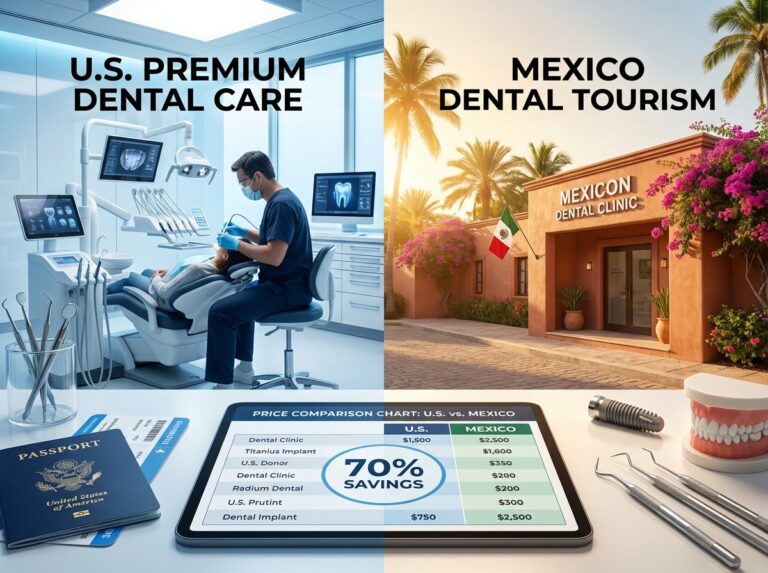
You will often read about savings of 70% to 85% compared to U.S. prices. It is important to understand where those numbers come from so you know what you are paying for—and what you aren’t. The lower prices in Tijuana are rarely due to “cheaper” implant materials (if you go to a reputable clinic), but rather structural economic differences.
| Cost Driver | Impact on Price | Explanation |
|---|---|---|
| Real Estate & Overhead | High Impact | Rent per square foot in Tijuana is a fraction of the cost in Southern California. This allows clinics to operate larger facilities with lower fixed costs. |
| Labor Costs | High Impact | Salaries for dental assistants, front desk staff, and hygienists are significantly lower in Mexico due to the local cost of living. |
| Lab Fees | Medium Impact | Local dental labs charge clinics much less for crowns and prosthetics than U.S. labs charge American dentists. |
| Liability Insurance | Medium Impact | Malpractice insurance premiums in the U.S. are astronomical. In Mexico, these costs are substantially lower, and those savings are passed to the patient. |
Because of these factors, a clinic can use top-tier titanium implants (like Straumann or Nobel Biocare) and genuine zirconia for crowns while still charging a third of the U.S. price. However, you must verify that the clinic is actually using the materials they claim.
Common Procedures and Speed
The Tijuana dental model is built for speed and efficiency, catering to the “dental tourist” who has limited time. The most commonly sought procedures in 2026 include:
- Dental Implants: Single units and full-arch restorations (All-on-4 or All-on-6).
- Crowns and Veneers: Zirconia and porcelain-fused-to-metal.
- Full Mouth Rehabilitation: Complex cases involving extractions, bone grafts, and immediate dentures.
- Root Canals: Often performed by a specialist (endodontist) in a single visit.
A distinct advantage here is the turnaround time. In the U.S., if you need a crown, your dentist usually takes an impression and sends it to an off-site lab, requiring you to come back two weeks later. In Tijuana, the volume of dental work has created a dense ecosystem of dental labs. Many large clinics have their own in-house CAD/CAM milling machines or use a lab just down the street.
This means a crown that takes two weeks in Chicago might be ready in 24 to 48 hours in Tijuana. For full-mouth cases, clinics often coordinate closely with labs to deliver provisional teeth the same day or the next day after surgery.
The International Patient Experience
Clinics that focus on American patients operate differently than typical local dentist offices. They function almost like concierges.
Language and Logistics
In these specific clinics, English is the primary language of business. You will find patient coordinators who speak fluent English and are accustomed to explaining complex treatment plans to Americans. They often handle logistics that have nothing to do with teeth, such as recommending hotels or arranging transport.
Bundled Services
To compete for your business, many clinics offer “dental vacation” packages. This might include a shuttle service that picks you up directly from the San Diego Airport or the border crossing. Some even have partnerships with local hotels to offer discounted recovery rates.
Tijuana Dental Tourism: Safe, Affordable & Close to San Diego is a resource that often highlights these logistical benefits, but always verify the current offers directly with the clinic.
A Critical Warning on Quality
While the savings are real, the quality is not uniform. Tijuana has hundreds of dental offices, ranging from state-of-the-art facilities that rival top U.S. hospitals to small, outdated offices that may not adhere to strict sterilization protocols.
You cannot assume that every dentist has the same training or standards. There is no single “Mexican Standard” that is rigorously enforced across every street corner. The responsibility falls on you to verify credentials. You need to check if the dentist is a specialist in the procedure you need (e.g., a periodontist for gum surgery, not a general dentist) and if the clinic has verifiable sterilization logs.
The drop in medical tourism reported in some sectors during 2024 and 2025—estimated at nearly 40% due to security fears—has made clinics more competitive. This is good for pricing but requires you to be even more vigilant against aggressive marketing that might mask poor clinical standards. High-quality care exists in Tijuana, but it is found through research, not by walking into the first clinic you see.
Security and Travel Safety Update 2026
Safety is usually the first question on everyone’s mind when planning a trip to Tijuana. It is late December 2025 right now. The security landscape has shifted over the last few years. You need accurate information rather than fear or hype. The reality of traveling to Baja California for dental work in 2026 requires preparation and situational awareness.
Check Official Government Advisories First
Security conditions can change overnight. Before you book a flight or drive to the border, you must check official sources. The U.S. Department of State issues travel advisories specifically for Mexico. These are broken down by state. You need to look at the guidance for Baja California.
Do not rely on general news headlines. Go straight to the source. The State Department assigns levels ranging from “Exercise Normal Precautions” to “Do Not Travel.” Baja California often has specific notes regarding non-essential travel or curfews for government employees. Local Baja California government channels also publish tourist safety bulletins. These can give you a more granular view of what is happening on the ground.
Critical Step: Register for the Smart Traveler Enrollment Program (STEP) through the U.S. Department of State. This free service connects your trip with the nearest U.S. Consulate. You receive safety updates and it helps the embassy contact you in an emergency.
Neighborhood Safety: Know Where You Are
Tijuana is a large metropolis. Safety varies significantly by neighborhood. Most dental tourists stay within a specific “medical bubble.” This area is generally well-policed and accustomed to international visitors.
Zona Río
This is the main business and financial district. It is where you will find most high-end dental clinics, hotels, and restaurants. The streets are wider and lighting is better. It feels similar to downtown San Diego. This is the safest zone for medical tourists.
Playas de Tijuana
This is the beach area. It is generally safe for tourists during the day. It is a popular spot for visitors who want to relax near the ocean after a procedure.
Areas to Avoid
Exercise extreme caution in Zona Norte. This is the red-light district. It has higher crime rates. Avoid peripheral neighborhoods like Sánchez Taboada or Camino Verde. There is rarely a reason for a dental patient to be in these areas. Stick to the main thoroughfares connecting the border entry to Zona Río.
Medical Tourism in Tijuana, Mexico: Prices, Safety & Travel offers additional context on which zones are best suited for international patients.
Crossing the Border Safely and Efficiently
How you cross the border impacts your safety and stress levels. Long wait times are common. Planning ahead reduces your exposure to uncertain environments.
- Cross Border Xpress (CBX): This is a pedestrian bridge connecting a terminal in San Diego directly to the Tijuana International Airport. It is exclusively for airline passengers. It is secure and avoids the chaos of the main land ports of entry. You park on the U.S. side and walk across.
- Clinic Shuttles: Many reputable clinics offer free shuttle services. They pick you up from the San Diego airport or a border parking lot. This is one of the safest options. You are in a private vehicle with a driver vetted by the clinic.
- SENTRI and Global Entry: If you drive, a SENTRI pass is invaluable. It allows you to use expedited lanes returning to the U.S. Wait times in standard lanes can exceed three hours. SENTRI lanes often take less than 20 minutes.
Practical Safety Measures for 2026
Most crime affecting tourists is opportunistic. Petty theft and scams are the primary risks. You can mitigate these with simple behavioral changes.
Daytime Travel
Schedule your appointments during daylight hours. Plan your arrival and departure so you are not navigating the city after dark. If your procedure runs late, stay in a hotel in Zona Río rather than trying to cross the border at night.
Transportation
Do not hail random taxis on the street. Use Uber or other vetted ride-sharing apps where the ride is tracked. Verify the license plate and driver name before entering the vehicle. Better yet, rely on transport arranged by your dental clinic or hotel.
Low Profile
Leave expensive jewelry and watches at home. Do not flash large amounts of cash. Dress casually to blend in. If you drive your own car, park it in a guarded hotel lot or the clinic’s secure parking. Vehicle break-ins can happen in unguarded public lots.
Emergency Preparedness
You need a plan for medical or logistical emergencies. Keep a physical list of emergency contacts. This should include your clinic’s after-hours number, a U.S. contact, and the U.S. Consulate in Tijuana.
Acute vs. Non-Acute Emergencies
If you develop a fever, severe swelling, or spreading redness after returning to the U.S., do not wait. Go to a U.S. emergency room or urgent care immediately. U.S. doctors will treat the acute infection regardless of where the surgery happened. For non-emergency complications (like a loose temporary crown), contact your Tijuana clinic immediately. Most reputable clinics use WhatsApp for 24/7 patient support and can advise if you need to return.
Carry copies of your medical records and your treatment plan. If you have a complication, a local doctor or a U.S. emergency room will need this information quickly. Ensure your phone is unlocked for international roaming so you have data access for maps and translation apps.
| Category | Action Item |
|---|---|
| Documents | Passport, driver’s license, printed clinic address, emergency contacts. |
| Tech | Phone with international data, Uber app, offline maps downloaded. |
| Money | Credit cards (notify bank of travel), small amount of cash for tolls/tips. |
| Transport | Confirm clinic shuttle or pre-book secure transport. Check border wait times. |
| Health | Register with STEP. Bring list of current medications and allergies. |
Security conditions are fluid. A neighborhood that is quiet today might have issues next month. Rely on your clinic for real-time advice. They have a vested interest in your safety. Ask them specifically about current conditions in Zona Río and the route from the border. They deal with international patients daily and know the safest protocols.
Once you feel confident about the logistics of getting there safely, the next priority is ensuring the medical quality matches the safety of your travel. You need to know exactly how to verify that the person holding the drill is qualified and the facility is clean.
How to Verify Clinics Credentials and Infection Controls
Finding a clinic in Tijuana isn’t the hard part. The city is packed with them, especially around Zona Río. The real work is filtering the high-quality medical facilities from the places that just look good on Instagram. You need to treat this like a hiring process where you are the boss and the dentist is the applicant.
If you just walked across the border or took a shuttle from San Diego, you need to know exactly who is about to work on your mouth. In 2026, the standard for verification has moved beyond just looking at a website. You need to see official documents.
Checking the Dentist’s License
In Mexico, a dental license is called a Cédula Profesional. This is non-negotiable. Every legitimate dentist has one issued by the SEP (Secretaría de Educación Pública).
Request the Cédula Number
Don’t just take their word for it. Ask for the dentist’s full name and their Cédula number before you even book the trip. You can verify this number online through the Mexican government’s professional registry. If they hesitate to give it to you, that is an immediate red flag.
Verify Specializations
General dentists are not oral surgeons. If you are going for implants, you need a specialist. Many dentists in Tijuana have general licenses but market themselves as cosmetic specialists. Ask specifically for their certification in implantology or prosthodontics. If they claim to be members of the Mexican Dental Association (ADM) or the American Dental Association (ADA), ask for their current membership ID to verify it.
Facility Accreditation and COFEPRIS
The clinic itself needs to be legal. The regulatory body in Mexico is COFEPRIS (Comisión Federal para la Protección contra Riesgos Sanitarios). It functions similarly to the FDA and health departments in the U.S.
COFEPRIS Registration
Every clinic operating legally must have a COFEPRIS operating license visible in the reception area. For 2026, you should ask for the specific registration number (Aviso de Funcionamiento or Licencia Sanitaria) for the facility. This confirms they are subject to federal health inspections regarding sanitation and equipment safety.
The “Show Me” Verification Checklist
Don’t rely on phone promises. Ask the patient coordinator to email or video-chat you these specific items. A transparent clinic will have this ready.
| Item to Request | What You Are Looking For |
|---|---|
| Sterilization Logs | Ask for the last 30 days of autoclave logs. You want to see dates, cycle temperatures, and confirmation that the cycle passed. |
| Biological Spore Tests | This tests if the sterilizer actually kills bacteria. Ask for their most recent monthly lab report confirming the autoclave is working. |
| Operatory Photos/Video | Request a quick video walk-through of the actual treatment room, not a stock photo. Look for bagged instruments and clean surfaces. |
| Imaging Capabilities | Confirm they have a CBCT (Cone Beam CT) scanner on-site or a contract with a nearby center. You cannot safely place implants without 3D imaging. |
| Written Treatment Plan | A document in English detailing every procedure, the brand of materials (e.g., Straumann, Nobel Biocare), and the price. |
Infection Control Protocols
You need to know how they handle the tools that go in your mouth. Standard practice in 2026 involves strict barriers and single-use items.
Single-Use Items
Needles, anesthetic carpules, suction tips, and irrigation syringes must be thrown away after one use. Ask the clinic explicitly: “Which items are single-use and which are sterilized?” If they reuse burrs (drills) without proper sterilization logs, it’s a risk.
Water Quality
Ask if the dental units use a self-contained water system with distilled water or if they are hooked up to the city supply. You want self-contained systems to avoid biofilm contamination.
Validating Materials and Labs
A cheap crown is often cheap because the material is substandard. You need to know where your new teeth are being made.
Lab Location and Accreditation
Tijuana has hundreds of dental labs. Some are high-tech facilities; others are garages. Ask the clinic for the name of the lab they use. Is it in-house? Is it a certified local lab? If they use a local lab in Tijuana, turnaround times are faster, but you still need to verify the lab’s reputation.
Material Traceability
For implants, demand to know the brand and the country of origin. You want FDA-approved or CE-marked brands. Ask if you will receive the sticker/lot number from the implant packaging after surgery. This is crucial if you ever need a U.S. dentist to fix or adjust it later.
Digital Detective Work: Reviews and Photos
Online reviews are easily manipulated. You have to read them with a skeptical eye.
Analyzing Reviews
Look at Google, Trustpilot, and RealSelf. Ignore the star rating and read the text. Watch out for clusters of 5-star reviews posted within a few days of each other—this often indicates a paid campaign. Look for reviews that mention specific complications and how the clinic handled them. A clinic with zero negative reviews is suspicious; a clinic that responds professionally to problems is realistic.
Before-and-After Photos
Check the metadata if possible, or look for consistency in the background. Ensure the lighting and angles are consistent. If the “after” photo looks like a magazine cutout while the “before” photo looks like a mugshot, be skeptical. Ask to see cases specifically similar to yours, not just their best full-mouth reconstruction.
Safety Nets: Insurance and Emergencies
Finally, you need a plan for when things go wrong. U.S. malpractice laws do not apply in Mexico. You cannot sue a Mexican dentist in a U.S. court.
Liability Insurance
Ask the clinic for proof of their professional liability insurance. Does it cover international patients? Some clinics carry policies specifically designed for medical tourism that offer some financial recourse for corrective work.
Emergency Protocols
Ask specifically: “If I have a serious infection or bleeding tonight at my hotel, who do I call?” You need a 24-hour contact number, not just an office line that goes to voicemail at 6 PM. They should also have a clear protocol for referring you to a local hospital if a medical emergency occurs during sedation.
Complication Management
Get a written policy on revisions. If a crown breaks or an implant fails, will they redo it for free? Does that include your travel costs? Most warranties only cover the dental work itself, not your flight or hotel. Get this in writing before you pay the deposit.
Costs logistics and managing follow up care
Great clinical work means nothing if the logistics fail. You need a plan that covers how you get there, where you stay, and what happens if a complication arises after you return home. This section breaks down the practical side of securing affordable care in Tijuana without compromising safety.
Pre-Travel Medical Preparation
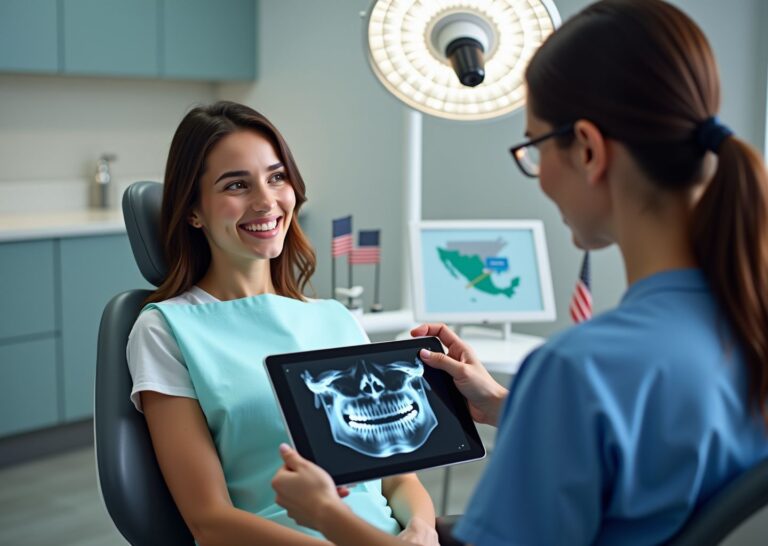
Do not rely solely on the Tijuana clinic for your initial diagnosis. Visit a local U.S. dentist first. Request a comprehensive exam and a digital copy of your panoramic X-rays or CBCT scans. Most modern systems allow you to export these as DICOM or STL files. You can email these files to prospective clinics in Mexico. This allows the Tijuana team to provide a more accurate preliminary treatment plan and price estimate before you book a flight.
The “Frank Conversation”
Ask your U.S. dentist if they are willing to handle follow-up care. Many U.S. dentists refuse to touch work done abroad due to liability concerns. If a crown placed in Tijuana fails, a U.S. dentist may require you to pay for a completely new procedure rather than a repair. Find a local provider who agrees to perform check-ups or remove sutures before you travel. This ensures you have a safety net once you cross back into the United States.
Trip Planning by Procedure Type
Your itinerary depends entirely on the complexity of the work. Rushing a complex procedure to catch a flight is a common cause of failure. Use these timelines to plan your stay.
| Procedure Category | Typical Timeline | Logistics Notes |
|---|---|---|
| Single-Visit Treatments (Fillings, simple extractions, whitening) |
1 Day | Arrive in the morning. Cross back before evening traffic peaks. No overnight stay required usually. |
| Staged Procedures (Implants, standard crowns) |
2 to 3 Trips | Trip 1 is for surgery or prep. Trip 2 happens 3 to 6 months later after osseointegration. Trip 3 is for final fitting. |
| Full-Mouth Rehabilitation (All-on-4, full arch restoration) |
5 to 14 Days (per trip) | Requires an extended stay. Plan for 24 to 72 hours of recovery in a local hotel before attempting to travel home. |
Logistics and Crossing the Border
San Diego is the primary gateway. You have two main options for crossing into Tijuana efficiently.
Walking Across via CBX
The Cross Border Xpress (CBX) is a pedestrian bridge connecting Otay Mesa directly to the Tijuana International Airport. It is safer and faster than the San Ysidro entry. You park on the U.S. side in a secure lot. You walk across the bridge and take a secure taxi or clinic shuttle from the Tijuana side. This avoids the chaotic street traffic at the main border crossing.
Driving and Parking
Driving your own car into Tijuana requires Mexican auto insurance. Most U.S. policies do not cover you once you cross the border. A better option is parking at a U.S. lot near the San Ysidro or Otay Mesa border. You can then walk across and meet a clinic driver. Verify the parking lot hours and security ratings before leaving your vehicle.
Passport Requirements
A valid passport is mandatory for U.S. citizens entering Mexico and returning to the U.S. A driver’s license is not sufficient for air travel or the CBX bridge. Check the expiration date. It should remain valid for at least six months beyond your travel dates.
Lodging and Safety
Stay in the Zona Río or Playas de Tijuana neighborhoods. These areas have a higher police presence and better infrastructure. Many clinics have partnerships with specific hotels like the Quartz Hotel or Grand Hotel Tijuana. These partner hotels often provide shuttle services directly to the clinic. This minimizes your time on the street and removes the need to navigate public transport.
Avoid walking alone at night. Stay within the hotel or clinic zones. If you need supplies or food, use ride-hailing apps like Uber where the ride is tracked. Verify the license plate before entering the vehicle.
Post-Op Care and Medication
Recovery starts before you leave Mexico. Ask your surgeon for a “fit to fly” assessment if you underwent sinus lifts or major grafting. Pressure changes in an aircraft cabin can damage fresh sinus repairs. You might need to stay ground-level for 48 hours.
Transporting Medication
You can bring prescription medication back into the U.S. for personal use, but U.S. Customs and Border Protection (CBP) has strict rules. The medication must be in its original container, and the name on the bottle must match the name on your passport. Carry a paper copy of the prescription written by your Mexican doctor.
Be particularly careful with controlled substances (like certain painkillers). CBP usually limits these to a maximum of 50 dosage units and requires a valid prescription from a DEA-registered practitioner or a valid Mexican prescription. Declare all medications when crossing back to avoid confiscation or fines.
Warranties and Documentation
A verbal promise is not a warranty. You need a written contract. This document must specify what happens if a crown chips or an implant fails. Dental Work in Mexico – 2026 Cost Guide, Best Cities & Safety Tips suggests verifying if the warranty covers only the materials or if it includes the labor for re-treatment.
The Contract Checklist
Ensure your agreement includes the following details:
- Total Price: A fixed cost in USD.
- Materials: Specific brand names for implants (e.g., Straumann, Nobel) and crown materials (e.g., Zirconia, E.max).
- Timeline: The expected number of visits and duration.
- Contingency: Who pays for travel if you need to return for a repair.
- Exclusions: Most warranties are void if another dentist (such as your U.S. dentist) attempts to repair or adjust the work. Clarify this clause before treatment.
Digital Records
Request copies of all post-treatment records before you leave the clinic. This includes the final X-rays, the implant serial number stickers, and the lab work order. Take photos of your patient file with your phone. You need these records if you require emergency care in the U.S.
Budgeting for the Unexpected
The quoted price is rarely the final cost of the trip. Smart budgeting prevents financial stress during treatment.
| Expense Item | Estimated Cost (2026) | Notes |
|---|---|---|
| CBX Ticket (Round Trip) | $40 – $55 | Cheaper if bought online in advance. |
| Border Parking | $20 – $40 per day | Secure lots charge a premium. |
| Hotel (Zona Río) | $90 – $180 per night | Ask for medical tourism rates. |
| Medication | $30 – $100 | Antibiotics and pain relief. |
| Emergency Buffer | $500 – $1,000 | Keep this accessible for flight changes or extra hotel nights. |
Plan for a return visit even for simple procedures. A bite adjustment or a loose screw might require a quick trip back. Factor this potential cost into your overall savings calculation. If the savings margin is too thin, the risk of travel costs eating your budget increases.
Final Takeaways and Next Steps
Making the decision to cross the border for dental care is rarely simple. It involves weighing significant financial benefits against logistical complexities and safety concerns. By now, you understand that Tijuana offers genuine opportunities for high-quality restorative work at 70–85% less than U.S. prices, but this is only true if you strip away the marketing noise and focus on verification.
The security landscape in late 2025 remains manageable for prepared travelers, but it requires strict adherence to protocols. The drop in medical tourism volume over the last year means clinics are competing harder for your business. This works in your favor regarding pricing and availability, but it also means you must be more vigilant against aggressive sales tactics from unlicensed or subpar providers.
When to Go vs. When to Stay Local
Not every dental issue justifies a trip to Mexico. The savings must outweigh the travel costs, time off work, and the inherent risk of being away from your primary care network. Use this framework to decide if the trip makes sense for your specific situation.
| Factor | Go to Tijuana | Stay in the U.S. |
|---|---|---|
| Procedure Type | Major restorative work (All-on-4, multiple implants, full mouth rehab). The savings on a $15,000+ treatment plan usually cover travel costs multiple times over. | Single fillings, routine cleanings, or emergency pain relief. The travel cost and time often negate the savings on procedures under $1,000. |
| Medical History | Healthy individuals or those with well-managed chronic conditions. You can handle travel and recovery in a hotel. | Patients with complex medical histories (uncontrolled diabetes, heart conditions) or those requiring hospital-based sedation. |
| Time Flexibility | You can stay 24–72 hours post-surgery for initial recovery and have flexibility for a return trip if adjustments are needed. | You need to return to work immediately or cannot easily return to the clinic for follow-up adjustments or warranty work. |
| Risk Tolerance | You are willing to perform deep vetting (checking COFEPRIS, logs) and navigate cross-border logistics. | You prefer the legal recourse and insurance compatibility of the U.S. system, even at a higher premium. |
Your Step-by-Step Action Checklist
Follow this sequence to minimize error and ensure a secure experience.
- Pre-Vetting Phase
Request the dentist’s full name and cédula number. Verify their specialty (e.g., periodontics for implants). Check reviews on independent platforms, looking for detailed accounts of recovery and aftercare, not just “five stars.” - Remote Consultation
Send your U.S. X-rays (panoramic or CBCT) for a preliminary review. Request an itemized treatment plan that lists specific material brands (e.g., Straumann implants, zirconia crowns) and a total cost estimate in USD. - Logistics Planning
Book your travel. If driving, check your insurance policy for Mexico coverage. If flying, buy your CBX ticket. Register your trip with the U.S. Department of State’s STEP program so you receive safety alerts. - The “Go” Decision
Confirm the clinic’s payment methods. Many offer better rates for cash, but credit cards offer better fraud protection. Ensure you have a written agreement regarding the warranty and a plan for post-op emergencies. - On-Site Verification
When you arrive, look at the facility. Is it clean? Does the staff wear proper PPE? Ask to see the sterilization area if you haven’t already. If something feels off, you have the right to leave. - Post-Op Protocol
Get a physical copy of your treatment records, including implant lot numbers and X-rays, before you leave the clinic. You will need these if you require emergency care back in the U.S.
Medical Tourism in Tijuana: Prices, Safety & Travel offers additional context on navigating specific zones if you are unfamiliar with the city layout.
Successful dental travel is about preparation, not luck. By treating this process with the same rigor as a business transaction, you protect your health and your wallet. Use the comparison tools and clinic checklists available on Dental Travel Compass to validate your choices before you book. The savings are real, but they are earned through diligence.
References
- Should You Get Dental Work in Tijuana? – heva — A comprehensive guide to getting real dental work in Tijuana, covering key aspects like costs, safety protocols, necessary credentials for …
- Tijuana medical tourism drops 40 percent as fears grow — Tijuana medical tourism is facing a major downturn with patient travel down by 40 percent. Discover the reasons behind this drop.
- Medical Tourism in Tijuana, Mexico: Prices, Safety & Travel — While most of Tijuana is safe for medical tourists, some places are best avoided due to higher crime statistics. Zona Norte- famous for …
- Is It Safe to Get Dental Implants in Mexico? — Safe Location: Our clinic is located in the safest district of Tijuana, specifically designed for medical tourism and distinct from general tourist areas.
- Dental Work in Mexico – 2026 Cost Guide, Best Cities & Safety Tips — Save 85% on dental work in Mexico. See verified cost data, best cities (Algodones, Tijuana, Cancun, PV), and essential safety tips for US …
- Dental Work Abroad: Expert Guide on Dental Tourism – DentaVacation — The country is a safe destination for tourists with a low crime rate. Cons. Varying infection control and sterilization standards demand careful evaluation …
- Best Countries for Americans for Dentistry in 2026 – World – WMedTour — The landscape of dental tourism is highly favorable for American patients looking toward 2026. The key finding is that proximity (Mexico, Costa …
- Tijuana Dental Tourism: Safe, Affordable & Close to San Diego — Complete Tijuana Dental Tourism Guide 2025: Safe, Trusted & Affordable near San Diego. Clinics, Costs & Tips for crossing the border. Save Up to 70%.
- Medical Tourism: Top Destinations, Costs and Risks in 2026 — It's no surprise that entire neighborhoods in Budapest, Hungary and Tijuana, Mexico have become hubs for dental tourists. One round of IVF …
Legal Disclaimers & Brand Notices
The information provided in this article is for informational and educational purposes only and does not constitute professional medical advice, diagnosis, or treatment. Always seek the advice of your physician, dentist, or other qualified healthcare provider with any questions you may have regarding a medical condition or procedure. Never disregard professional medical advice or delay in seeking it because of something you have read in this content.
All product names, logos, and brands mentioned herein are the property of their respective owners. All company, product, and service names used in this article are for identification purposes only. Use of these names, logos, and brands does not imply endorsement.